
From Waste to Power: Why Industries Are Embracing Biomass Fuel

Today, industries are looking for smarter ways to reduce Carbon Emissions, save on fuel costs, and meet growing environmental standards. As the demand for Renewable Energy continues to grow, many businesses are moving away from traditional Fossil Fuels and choosing more Sustainable Energy alternatives.
One of the best options is Biomass Fuel. It is made from natural materials like Agricultural Waste, crop residues, wood waste, and Nut Shell that would otherwise go unused. These materials are processed into Biomass Pellets and Biomass Briquettes, which are widely used in Industrial Boilers, furnaces, and other Industrial Heating Systems.
By switching to Biomass Energy, industries can reduce their dependence on Fossil Fuels, lower their Carbon Emissions, and support a more sustainable future. With its cost-effectiveness, reliable performance, and eco-friendly benefits, Biomass Fuel is becoming the preferred energy source for modern industries.
Why More Industries Are Choosing Biomass Fuel for Sustainable Energy
More industries are switching to Biomass Fuel because it is a clean, affordable, and reliable energy source. Made from nut shell, Agricultural Waste, and other natural materials, biomass helps reduce dependence on Fossil Fuels.
It can also be used in many existing Industrial Boilers with very few changes, making the switch easy and cost-effective. By choosing Biomass Energy, industries can lower Carbon Emissions, reduce fuel costs, and support a more sustainable future while maintaining efficient day-to-day operations.

Top Reasons Industries Are Switching to Biomass Fuel
Renewable and Eco-Friendly: Biomass Fuel is made from natural resources that can be replenished, making it a sustainable alternative to Fossil Fuels.
Makes Good Use of Agricultural Waste: It converts Agricultural Waste, crop residues, wood waste, and other organic materials into valuable energy instead of letting them go to waste.
Easy to Use in Existing Systems: Most Industrial Boilers and furnaces can use Biomass Fuel with minimal modifications, reducing the need for expensive upgrades.
Supports Sustainability Goals: By lowering Carbon Emissions and reducing dependence on Fossil Fuels, Biomass Fuel helps industries move toward cleaner and more sustainable operations.
As industries focus on cleaner and more efficient energy, Biomass Fuel has become a practical long-term solution. It offers reliable performance, helps reduce Carbon Emissions, lowers fuel costs, and supports sustainability goals, making it an ideal choice for businesses looking for a responsible and future-ready energy source.
How Biomass Fuel Turns Waste-to-Energy
One of the greatest benefits of Biomass Fuel is that it gives new purpose to Agricultural Waste and other organic materials. Instead of being burned in fields or thrown away, these resources are converted into clean, usable energy. This Waste-to-Energy approach not only reduces waste but also provides industries with a reliable, Renewable Energy source while supporting a cleaner and more sustainable environment.
Some of the most commonly used biomass raw materials include:
● Groundnut Shells – A high-energy Agricultural Waste by-product widely used for Biomass Fuel production.
● Crop Husk and Straw – Leftover materials from crops like rice and wheat that can be converted into clean energy.
● Sawdust and Wood Waste – By-products from sawmills and wood industries that are ideal for making Biomass Pellets and Biomass Briquettes.
● Agro-Processing Residues – Organic waste generated during the processing of crops, grains, and food products, which can be reused as a Renewable Energy source.
Using advanced processing methods, these organic materials are transformed into Biomass Pellets and Biomass Briquettes. This process gives agricultural and industrial waste a new purpose by turning it into a clean, renewable fuel. As a result, industries can reduce waste, lower their dependence on Fossil Fuels, and support more sustainable energy practices.
CNSL: A Sustainable Biomass Fuel for Industries
Cashew Nut Shell Liquid (CNSL) is another valuable biomass fuel made from cashew nut shells. It burns efficiently, produces high heat, and is increasingly used in industrial boilers and furnaces as a cleaner alternative to conventional fossil fuels. By converting agricultural waste into useful energy, CNSL helps industries reduce fuel costs, lower carbon emissions, and support more sustainable operations.
Cashew De-Oiled Cake (DOC) is the solid material left after oil is extracted from cashew shells. Instead of being discarded, it is widely used as a biomass fuel because of its good heat output and reliable combustion. Industries use Cashew DOC in boilers and heating systems to replace traditional fuels, making better use of agricultural waste while reducing environmental impact and supporting cleaner energy practices.
Common Industrial Uses of Biomass Fuel
Biomass Fuel is widely used in industries that need a steady and reliable source of heat for their daily operations. It powers Industrial Boilers, furnaces, and Industrial Heating Systems used in manufacturing processes, helping businesses maintain consistent production while reducing fuel costs and lowering their environmental impact.
Some of the major industries that use Biomass Fuel include:
✓ Food Processing Industry
✓ Textile Industry
✓ Paper & Pulp Industry
✓ Chemical Industry
✓ Ceramic & Brick Manufacturing
✓ Pharmaceutical Industry
✓ Agro-Processing Units
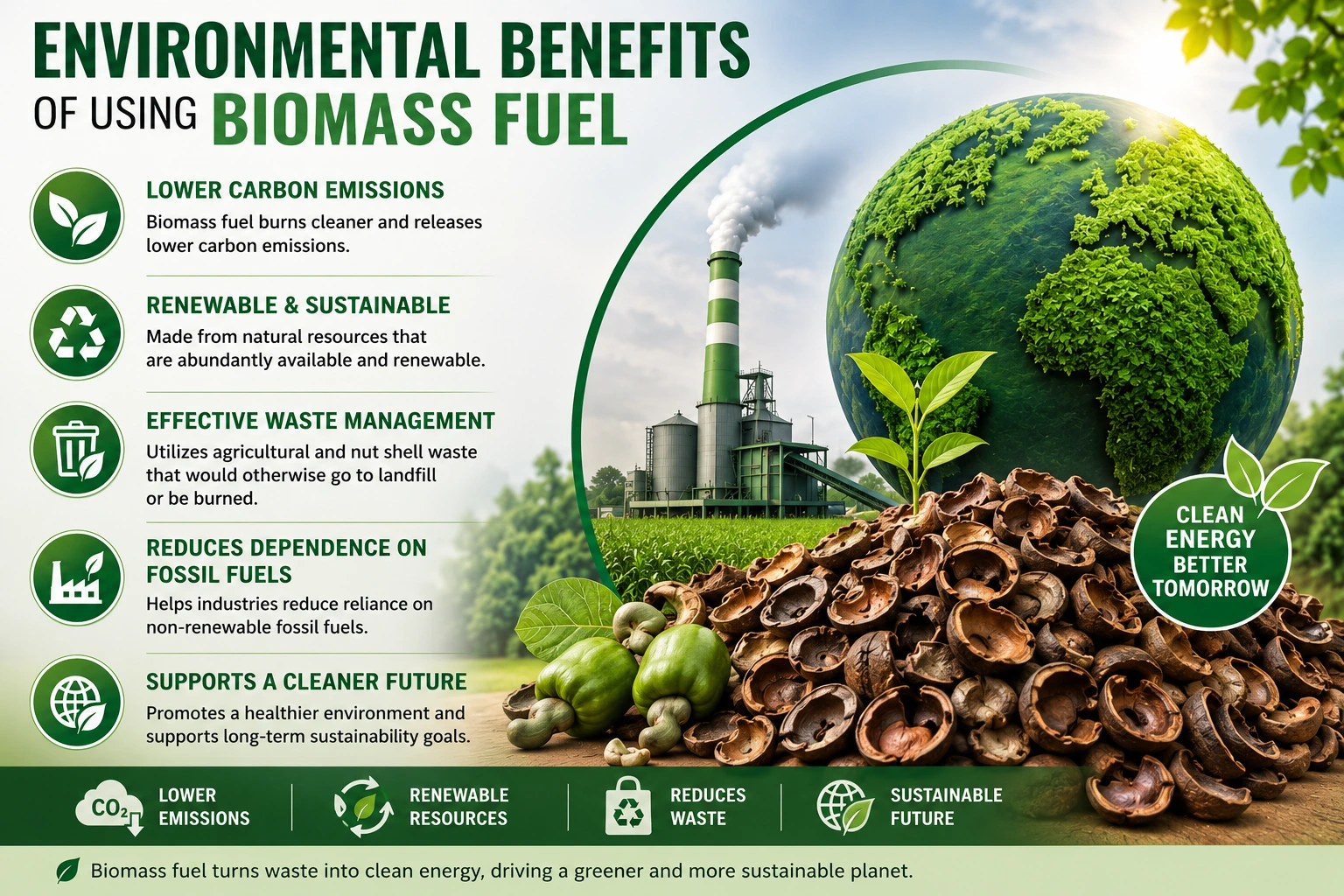
Environmental Benefits of Using Biomass Fuel
As industries focus on cleaner energy, Biomass Fuel offers a sustainable solution. It helps reduce Carbon Emissions, makes better use of Agricultural Waste, and lowers dependence on Fossil Fuels, supporting a cleaner environment and responsible resource management.
• Encourages Renewable Energy Use – Promotes the use of clean, Renewable Energy instead of Fossil Fuels.
• Makes Better Use of Agricultural Waste – Converts crop residues and organic waste into valuable fuel.
• Reduces Dependence on Fossil Fuels – Helps industries lower their reliance on coal, oil, and other non-renewable fuels.
• Supports Sustainable Industrial Growth – Helps businesses achieve long-term environmental and sustainability goals.
By choosing Biomass Fuel, industries can produce cleaner energy, reduce their environmental impact, and build more sustainable operations. It is a simple yet effective step toward a greener and more responsible future.
Conclusion
Industrial energy is moving toward sustainable options, with Biomass Fuel leading the shift. Using Biomass Pellets and Biomass Briquettes, industries cut Carbon Emissions, reduce costs, and utilize waste. It works in existing systems, making adoption easy while supporting long-term green energy goals globally.
As governments and industries continue to promote Renewable Energy and environmentally responsible practices, the demand for Biomass Fuel is expected to grow. By investing in Biomass Fuel today, businesses are not only improving their operations but also contributing to a cleaner environment and a more sustainable future for generations to come.
