
CNSL Applications and the Future of Cashew Shell Liquid
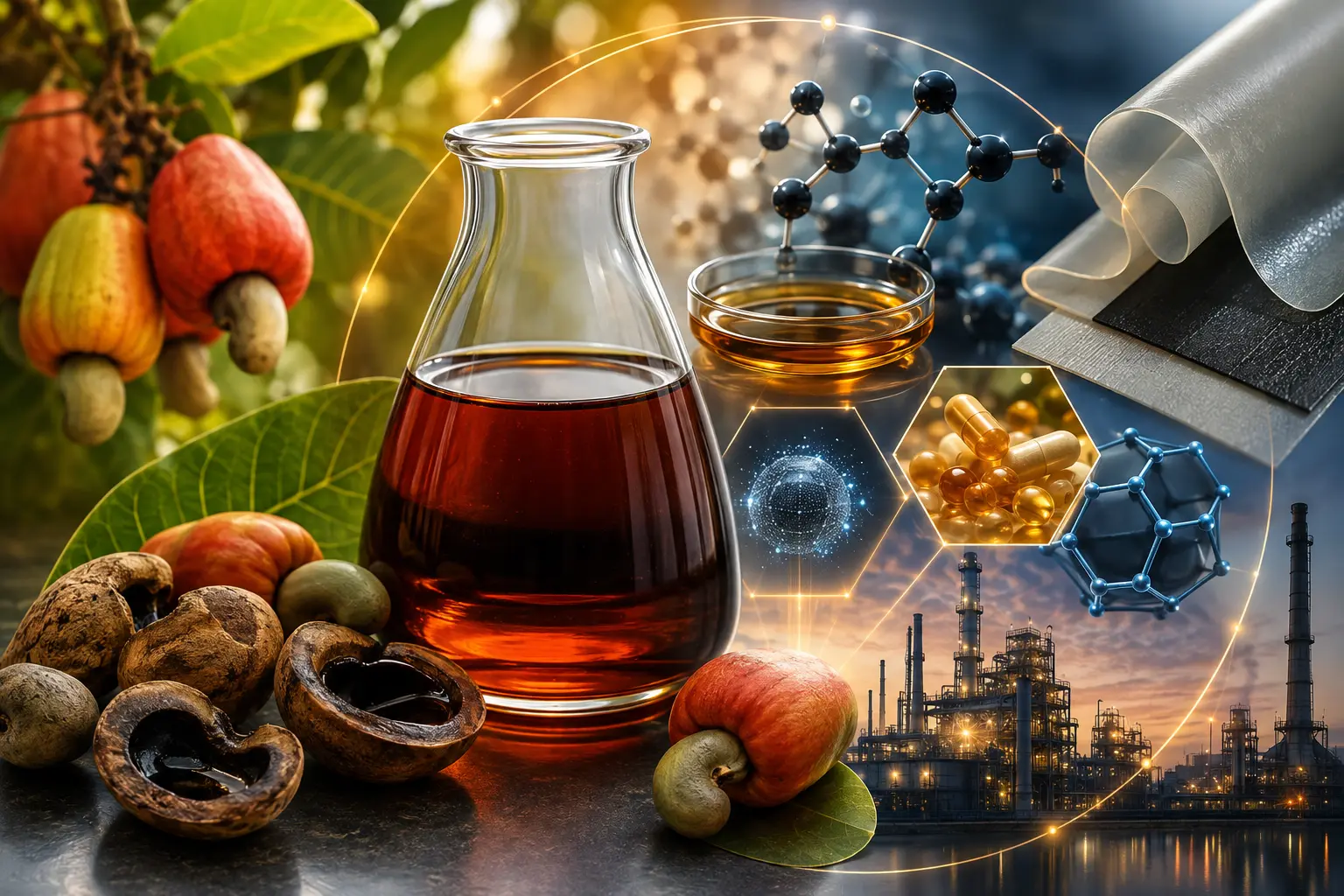
The cashew industry is known for producing one of the world's most popular nuts, but there is another valuable product hidden within the cashew shell-Cashew Nut Shell Liquid (CNSL). This natural, renewable liquid is gaining increasing attention across industries because of its unique chemical properties, versatility, and potential to replace petroleum-based materials in several applications.
CNSL is extracted from cashew nut shells and contains naturally occurring compounds such as anacardic acid, cardanol, cardol, and methyl cardol. These compounds give CNSL remarkable properties, including heat resistance, chemical resistance, antimicrobial potential, and flexibility. Traditionally, CNSL has been used in products such as industrial coatings, adhesives, friction materials, resins, paints, and brake linings. However, research and technological advancements are opening the door to many more possibilities.
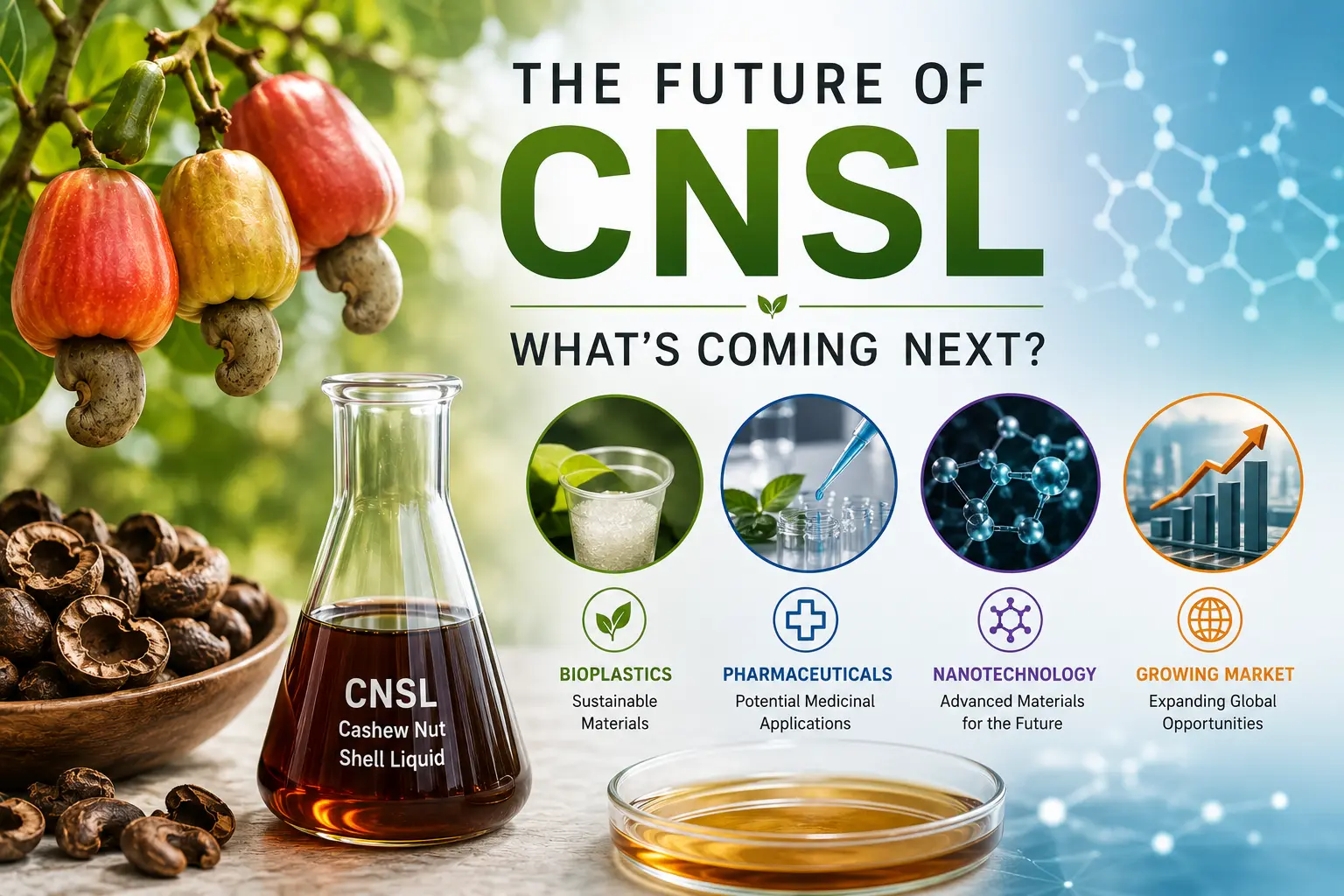
Scientists Are Exploring Even More Uses for CNSL
Scientists all over the world are working hard to discover even MORE uses for CNSL. As industries look for sustainable alternatives to conventional petroleum-based raw materials, CNSL is emerging as an exciting bio-based resource.
One exciting area is Bioplastics - plastics made from natural, renewable sources instead of petroleum. Researchers have found that CNSL-derived compounds can be used to develop bio-based polymers and materials with useful mechanical and thermal properties. Some of these materials are being investigated for improved biodegradability and reduced environmental impact.
That means CNSL could potentially contribute to the development of more sustainable plastic alternatives, helping reduce dependence on fossil-based raw materials. While research is still progressing, the possibility of creating useful materials from an agricultural by-product is an important step toward a more circular economy.
CNSL and the Future of Bioplastics
Plastic pollution has become a major global concern, increasing the demand for renewable and environmentally responsible materials. This is where CNSL bioplastics and bio-based polymers could become increasingly important.
Compounds such as cardanol contain a chemically active structure that can be modified to produce different types of polymers, resins, and composites. Researchers are studying CNSL-based materials for packaging, coatings, construction materials, composites, and other applications.
The major advantage is that CNSL comes from cashew nut shells, an agricultural by-product that would otherwise have limited value. Turning this waste stream into a useful industrial raw material creates additional economic value while supporting more sustainable manufacturing.
However, it is important to understand that not every CNSL-based material is automatically biodegradable. Biodegradability depends on the specific formulation and polymer structure. This is why continued research and development remain essential.
Pharmaceuticals: An Emerging Area of Research
Another exciting development is in the field of pharmaceuticals. Some studies have shown that compounds found in CNSL have potential biological and medicinal properties-including anti-inflammatory and antimicrobial effects.
Compounds such as anacardic acid and cardanol have attracted scientific interest because of their biological activity. Researchers are investigating how these naturally occurring compounds interact with microorganisms, cells, enzymes, and other biological systems.
While it's still early days in this research, the possibility of using CNSL-derived compounds in pharmaceutical and biomedical research is incredibly exciting.
It is important to note that potential medicinal activity does not mean CNSL itself is an approved medicine or treatment. Significant laboratory research, safety testing, clinical studies, and regulatory approval would be required before any CNSL-derived pharmaceutical product could be used medically.
Nevertheless, this area demonstrates how a material traditionally associated with industrial applications could potentially contribute to completely new fields.
CNSL in Advanced Coatings and Resins
CNSL already has an established role in industrial coatings and resins, but researchers continue to improve these applications.
Cardanol, one of the major components derived from CNSL, can be chemically modified to create bio-based epoxy resins, polyurethane materials, phenolic resins, and specialty coatings.
These materials can offer properties such as chemical resistance, thermal stability, flexibility, and durability, making them useful in demanding industrial environments.
As industries increasingly search for bio-based resins and sustainable coatings, CNSL could become an increasingly attractive raw material for manufacturers looking to reduce their dependence on conventional fossil-based chemicals.

The Global CNSL Market Is Growing
The global CNSL market is also growing rapidly. Countries like India, which is one of the world's largest cashew producers, are investing heavily in CNSL processing, refinement, research, and value-added applications.
India has a significant advantage because of its established cashew-processing industry and availability of cashew shells. Efficient extraction and processing of CNSL can transform what is essentially an agricultural by-product into a valuable industrial resource.
The market is expected to grow significantly over the next decade as more industries discover the benefits of this remarkable natural liquid.
Growing interest in renewable chemicals, bio-based materials, green manufacturing, sustainable polymers, and circular economy solutions is likely to create additional opportunities for CNSL manufacturers and processors.
Why CNSL Could Be Important for a Sustainable Future
One of the most exciting aspects of CNSL is its origin. It is derived from a renewable agricultural resource rather than being produced entirely from petroleum-based raw materials.
This makes CNSL particularly relevant at a time when industries are searching for ways to reduce waste and improve resource efficiency.
The future of CNSL is not simply about producing more liquid from cashew shells. The real opportunity lies in value addition-developing advanced CNSL derivatives and transforming them into high-performance materials for different industries.
From industrial coatings and adhesives to bioplastics, advanced polymers, nanomaterials, and pharmaceutical research, the possibilities are expanding.
What Comes Next for CNSL?
The next stage of CNSL development will likely focus on innovation, advanced processing, sustainability, and commercial scalability.
Researchers will continue working to improve extraction technologies, refine CNSL components, develop new derivatives, and understand their properties. At the same time, manufacturers will need to focus on cost-effective production, consistent quality, environmental performance, and large-scale applications.
The future could see CNSL moving beyond its traditional industrial uses and becoming an important part of the bio-based chemical industry.
Conclusion
CNSL is much more than a by-product of the cashew industry. It is a versatile, renewable, and increasingly valuable bio-based raw material with applications that extend across multiple industries.
From bioplastics and sustainable polymers to pharmaceuticals, nanotechnology, coatings, adhesives, and advanced materials, researchers are discovering new possibilities every day.
The journey is still underway, and many of these emerging applications require further research, testing, and commercial development. But one thing is clear: the future of CNSL is full of potential.
As the world moves toward renewable resources and more sustainable manufacturing, Cashew Nut Shell Liquid could play an increasingly important role in transforming agricultural waste into innovative, high-value products.
The cashew shell may look ordinary-but inside it could be one of the most interesting natural resources for the materials of tomorrow.
