
What Is Cardol? Properties, Industrial Uses and Benefits of This CNSL-Derived Compound
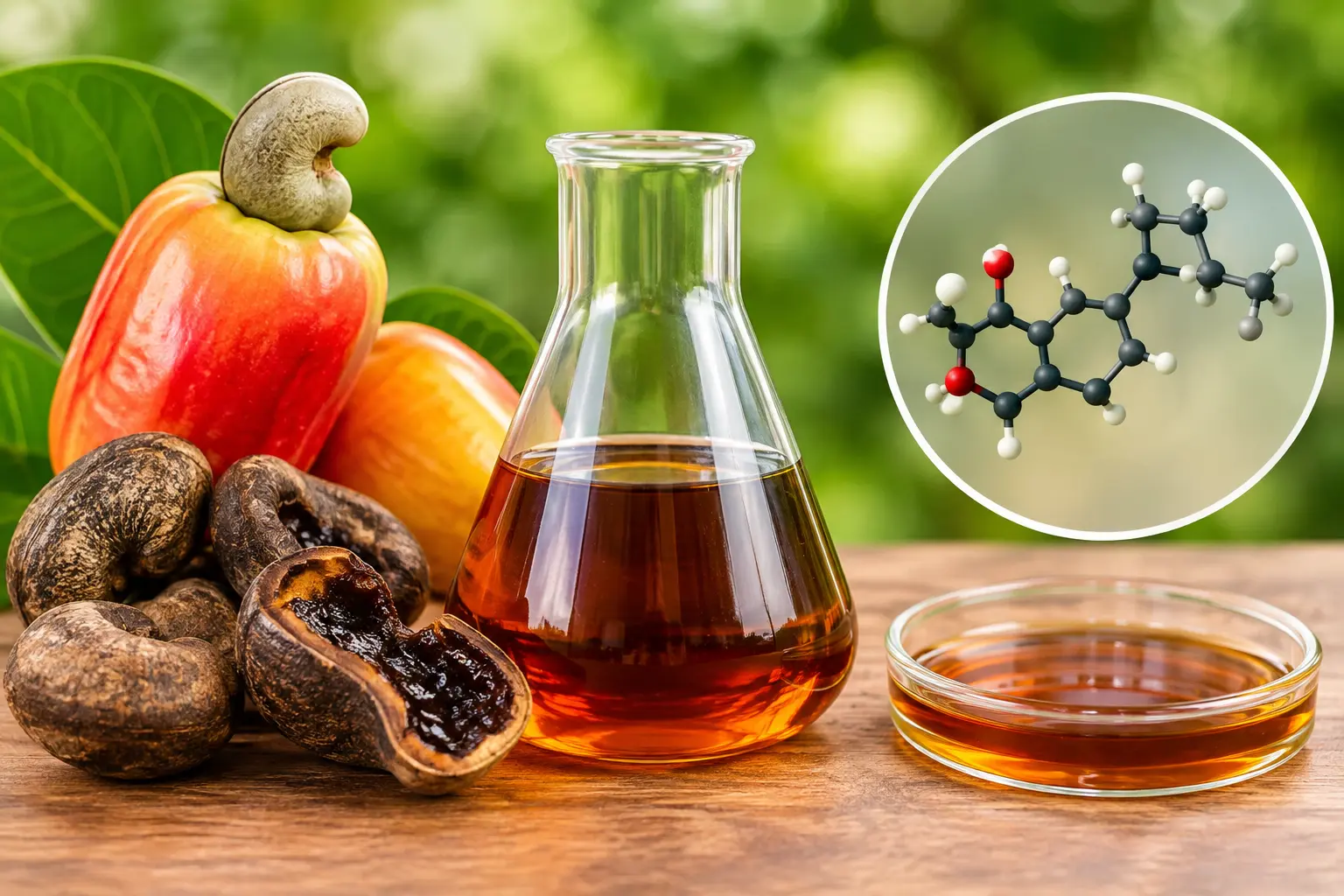
Cardol is an important phenolic compound found in Cashew Nut Shell Liquid (CNSL), a valuable by-product of the cashew processing industry. It has attracted attention in chemical research because of its unique molecular structure and potential applications in bio-based resins, polymers, coatings, and specialty chemicals.
As industries increasingly explore renewable raw materials, cardol offers opportunities to develop new materials from agricultural by-products. Its chemical properties make it particularly interesting for researchers and manufacturers working on advanced polymers and sustainable chemical solutions.
But what exactly is cardol, how is it obtained from cashew nut shells, and what are its major industrial applications? This guide explains cardol, its properties, production, uses, and potential role in the future of bio-based chemical manufacturing.
What Is Cardol?
Cardol is a naturally occurring phenolic compound found in Cashew Nut Shell Liquid (CNSL). It is one of the important chemical constituents of CNSL, along with cardanol and anacardic acid.
CNSL is a dark, viscous liquid present inside the honeycomb-like structure of cashew nut shells. It is recovered during cashew processing and used as a raw material for producing various industrial chemicals.
Chemically, cardol is a long-chain substituted resorcinol. Its molecular structure contains two hydroxyl groups attached to an aromatic ring and a long hydrocarbon side chain containing varying degrees of unsaturation.
These structural features make cardol useful for chemical modification and the development of different materials. Researchers are exploring its potential in bio-based epoxy resins, polymers, and other specialty chemical applications.
Unlike many conventional chemical feedstocks derived from petroleum, cardol originates from a renewable agricultural by-product. This makes it relevant to research into alternative raw materials for industrial manufacturing.
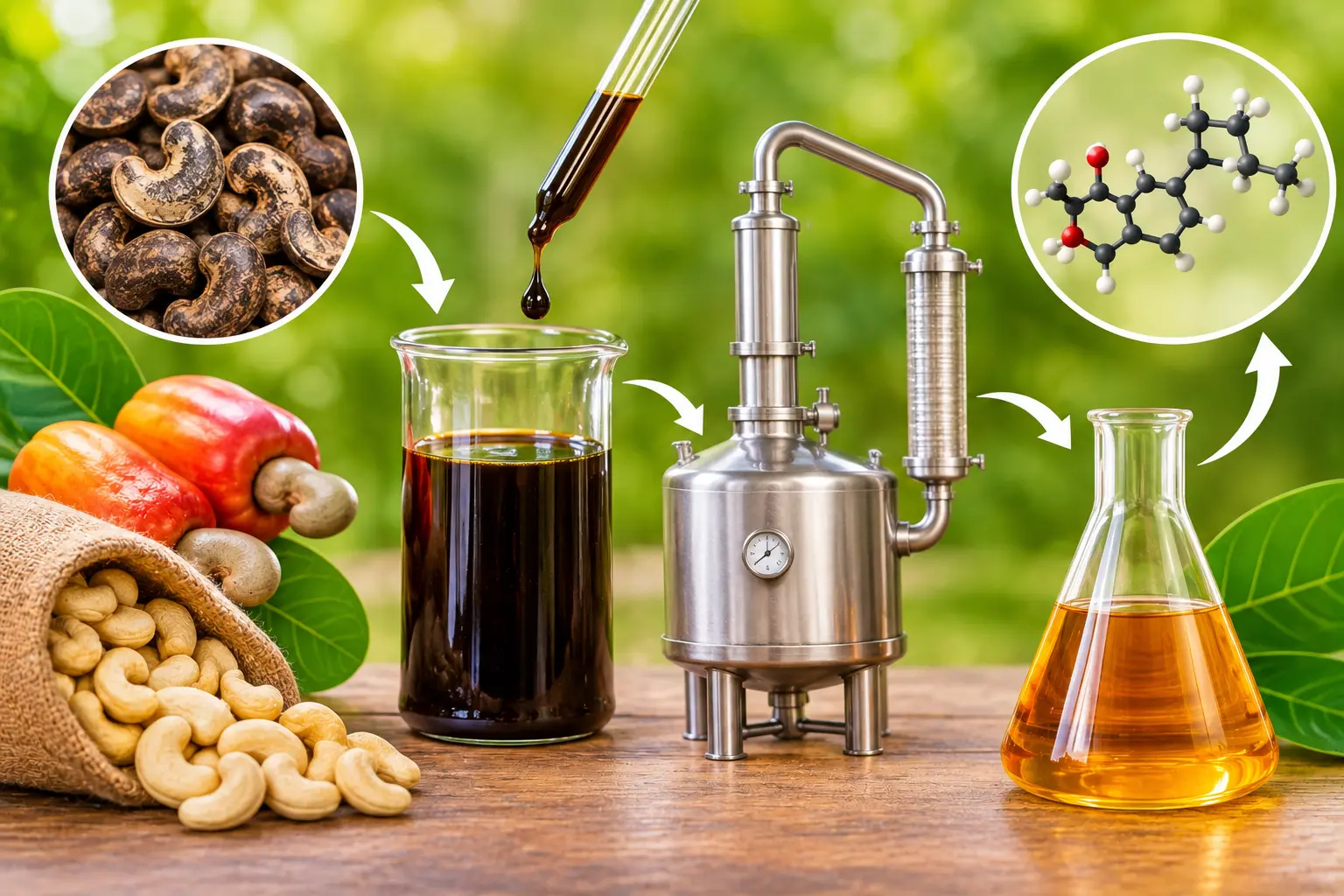
Cardol is obtained from Cashew Nut Shell Liquid through suitable extraction, separation, and purification processes. The exact method depends on the composition of the raw CNSL and the required product specifications.
The general process involves several stages.
1. Collection of Cashew Nut Shells
Cashew nut shells are collected during the processing of cashew nuts. These shells contain CNSL, which serves as the starting material for recovering valuable phenolic compounds.
2. Extraction of CNSL
The liquid is extracted from cashew nut shells using suitable industrial methods, such as mechanical extraction, thermal processing, or solvent-based techniques.
The composition of the extracted CNSL depends on the extraction method and processing conditions.
3. Separation of Chemical Components
CNSL contains a mixture of phenolic compounds, including cardol, cardanol, and anacardic acid. These components can be separated or processed using appropriate chemical and physical methods.
4. Purification of Cardol
Additional separation and purification steps may be required to obtain cardol with the desired purity and composition. Manufacturers and researchers evaluate the final material according to its intended application.
The processing method is important because different extraction and heating conditions can change the chemical composition of CNSL.
Key Properties of Cardol
Cardol has several chemical characteristics that make it interesting for industrial research and material development.
1. Phenolic Chemical Structure
Cardol contains two hydroxyl groups attached to an aromatic ring. These functional groups provide opportunities for chemical reactions and the development of modified compounds.
This characteristic makes cardol relevant to research involving resins, polymers, and specialty chemicals.
2. Long Hydrocarbon Side Chain
The molecular structure of cardol includes a long hydrocarbon side chain. This feature can influence the flexibility, hydrophobicity, and other properties of materials developed from cardol.
Its unsaturated side chain also provides opportunities for chemical modification.
3. Potential for Polymer Development
Cardol can be used as a starting material for synthesising modified polymers and resin systems. Researchers are studying how its structure influences the processing and final properties of these materials.
4. Renewable Origin
Cardol is obtained from CNSL, which comes from cashew nut shells. Its origin provides an opportunity to use agricultural by-products as feedstocks for value-added chemical products.
5. Chemical Versatility
The combination of an aromatic ring, hydroxyl groups, and a long hydrocarbon side chain makes cardol a versatile molecule for chemical research.
Its suitability for a particular application depends on its purity, formulation, processing conditions, and the performance requirements of the final product.
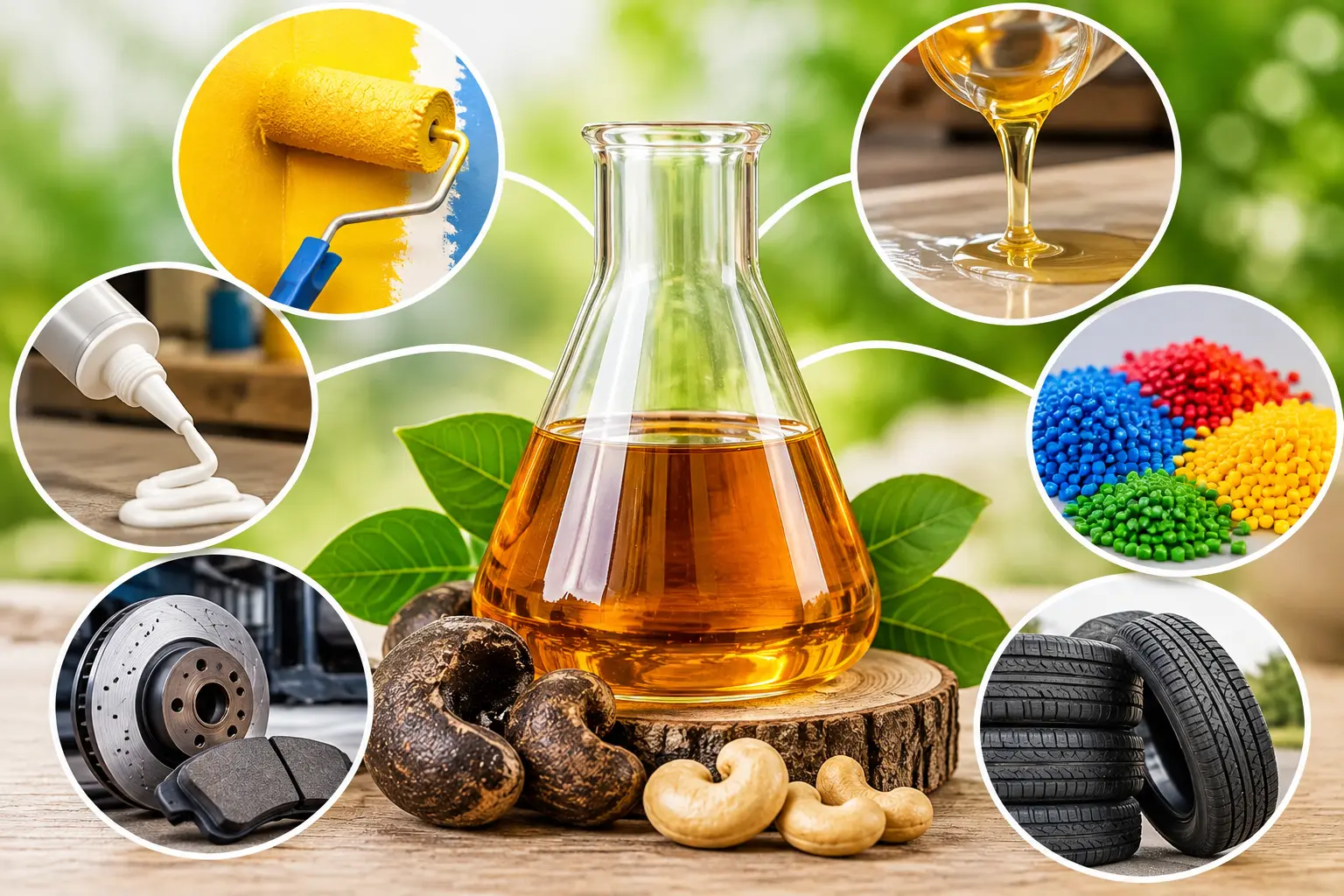
Cardol is gaining interest in specialty chemical research because of its potential to serve as a building block for different materials. Some applications are being explored through laboratory research and formulation development rather than being established as large-scale commercial uses.
1. Cardol in Bio-Based Epoxy Resins
One promising application of cardol is the development of partially bio-based epoxy resins.
Epoxy resins are used in protective coatings, adhesives, electrical components, industrial flooring, and composite materials. Researchers have investigated the use of cardol to produce epoxy compounds with different processing and performance characteristics.
A 2022 study published in the European Polymer Journal examined cardol as a starting material for synthesising partially bio-based epoxy resins. The research demonstrated its potential for producing epoxy materials with useful processing characteristics.
Further formulation and testing are necessary to determine the suitability of these materials for specific industrial applications.
2. Cardol in Polymer Development
Cardol can serve as a chemical building block for developing specialised polymer materials.
Its aromatic structure and reactive functional groups offer opportunities for producing modified polymers with tailored properties. Depending on the chemical reactions and formulation used, researchers can investigate changes in flexibility, thermal behaviour, and other material characteristics.
This makes cardol relevant to the broader field of bio-based polymer development.
3. Cardol in Resin Research
Phenolic compounds are important raw materials in resin chemistry. Cardol's molecular structure makes it a potential starting material for developing and modifying resin systems.
Researchers can investigate its use in different formulations to understand how it affects the properties of the resulting material.
The suitability of cardol-based resins depends on factors such as chemical composition, curing conditions, mechanical performance, and intended end use.
4. Cardol in Protective Material Development
Protective materials often require suitable adhesion, durability, moisture resistance, and thermal performance.
Cardol-derived compounds may offer opportunities for developing selected protective materials through chemical modification and formulation research.
However, the performance of any cardol-based coating or protective system must be evaluated through application-specific testing. Cardol itself should not be assumed to provide all these properties without further processing.
5. Cardol as a Specialty Chemical Intermediate
Cardol can serve as a starting material for synthesising other chemical compounds.
Its functional groups allow researchers to explore different chemical modifications for producing materials with specific characteristics. These derivatives may have applications in advanced polymers, resin systems, and other specialty chemical formulations.
This potential makes cardol relevant to manufacturers and researchers interested in expanding the industrial value of cashew-derived chemicals.
What Is the Difference Between Cardol and Cardanol?
Cardol and cardanol are two distinct phenolic compounds found in Cashew Nut Shell Liquid. Although they come from the same source, their molecular structures differ.
Cardol contains two hydroxyl groups attached to its aromatic ring, while cardanol contains one phenolic hydroxyl group. Both compounds have a long hydrocarbon side chain, but their different functional groups influence their chemical reactivity.
Cardanol is widely used in the development of industrial coatings, epoxy curing agents, resins, and other chemical products. Cardol is also being investigated as a valuable starting material, particularly for bio-based epoxy resins and polymer development.
Understanding the difference between cardol and cardanol is important when selecting raw materials for chemical manufacturing because their properties and potential applications are not identical.
Environmental Benefits and Sustainability Potential of Cardol
The growing interest in cardol is closely connected to the better utilisation of agricultural by-products and the development of renewable chemical feedstocks.
Better Utilisation of Cashew Shells
Cashew nut shells are generated in large quantities during cashew processing. Recovering CNSL and its valuable constituents creates opportunities to use these by-products as raw materials for industrial applications.
Support for Bio-Based Chemical Research
Cardol provides a renewable starting material for investigating new polymers, epoxy resins, and specialty chemicals. Such research may help manufacturers identify alternatives to selected petroleum-derived ingredients.
Value Addition in the Cashew Industry
Processing CNSL into useful chemical components creates opportunities to increase the value of cashew processing resources. It also connects the agricultural sector with chemical manufacturing and materials research.
However, the environmental benefits of cardol-based products depend on the complete production process, including energy consumption, chemical inputs, waste management, and the performance of the final material.
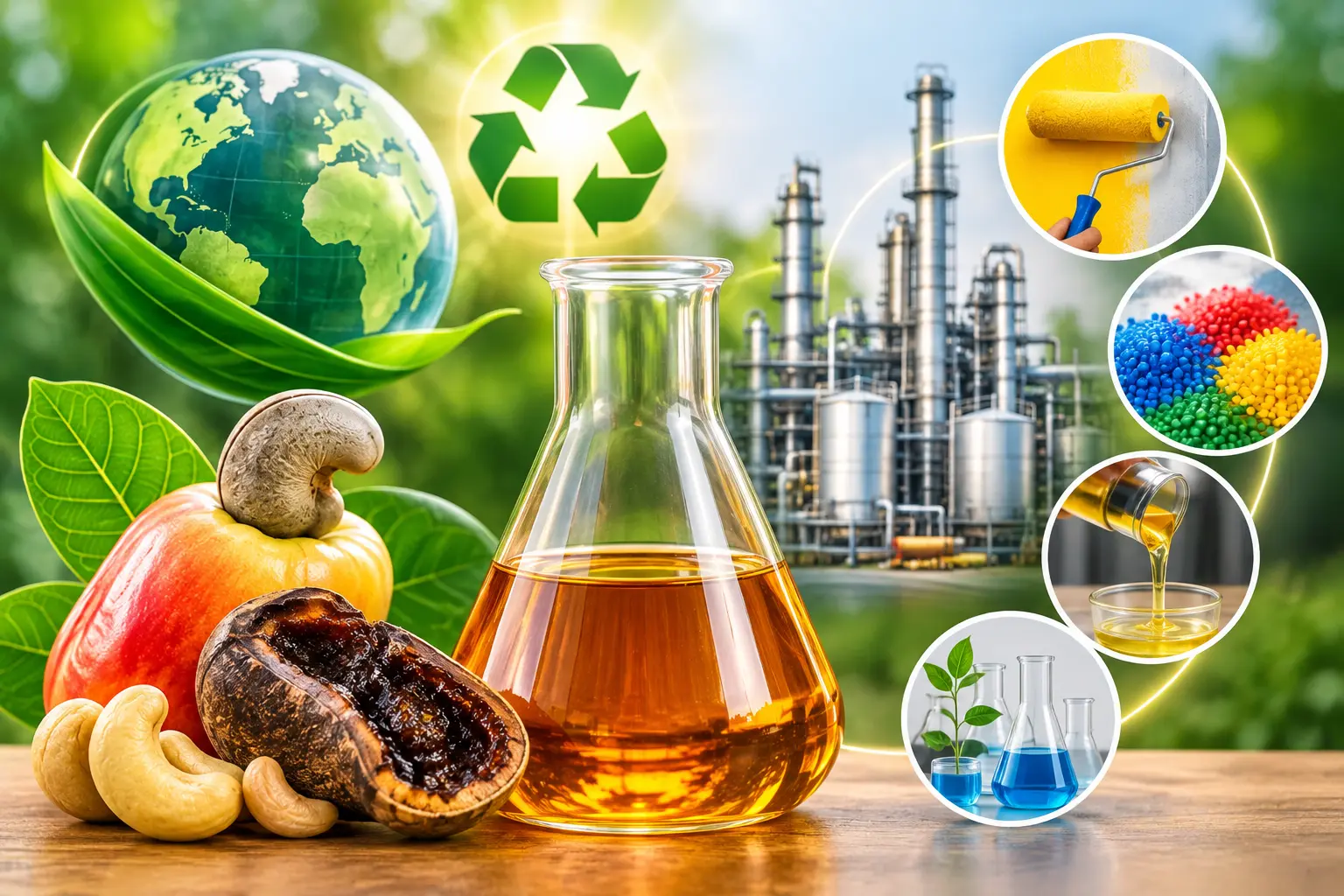
The chemical industry continues to investigate renewable raw materials that can meet technical requirements while supporting more efficient resource utilisation.
Cardol offers an interesting opportunity because it comes from a non-edible agricultural by-product and contains functional groups that can be modified for different applications.
Research into cardol-based epoxy resins and polymers demonstrates its potential as a starting material for advanced chemical development. Further research and industrial testing will help establish which applications offer the greatest technical and commercial value.
For businesses involved in cashew processing and specialty chemicals, cardol represents one of the opportunities available through the value-added utilisation of Cashew Nut Shell Liquid.
Conclusion
Cardol is a naturally occurring phenolic compound found in Cashew Nut Shell Liquid (CNSL). Its unique chemical structure makes it valuable for research into bio-based epoxy resins, polymers, resin systems, and specialty chemical intermediates.
By converting cashew nut shell by-products into useful chemical raw materials, the industry can explore additional opportunities for value addition and renewable material development.
As research advances, cardol may contribute to the development of new industrial materials and expand the potential applications of cashew-derived chemicals.
At Top Cashews, understanding the industrial potential of cashew processing by-products highlights how the value of cashews extends beyond edible kernels to include valuable raw materials for chemical research and manufacturing.
