
How Cardanol Is Transforming the Bio-Based Chemical Industry
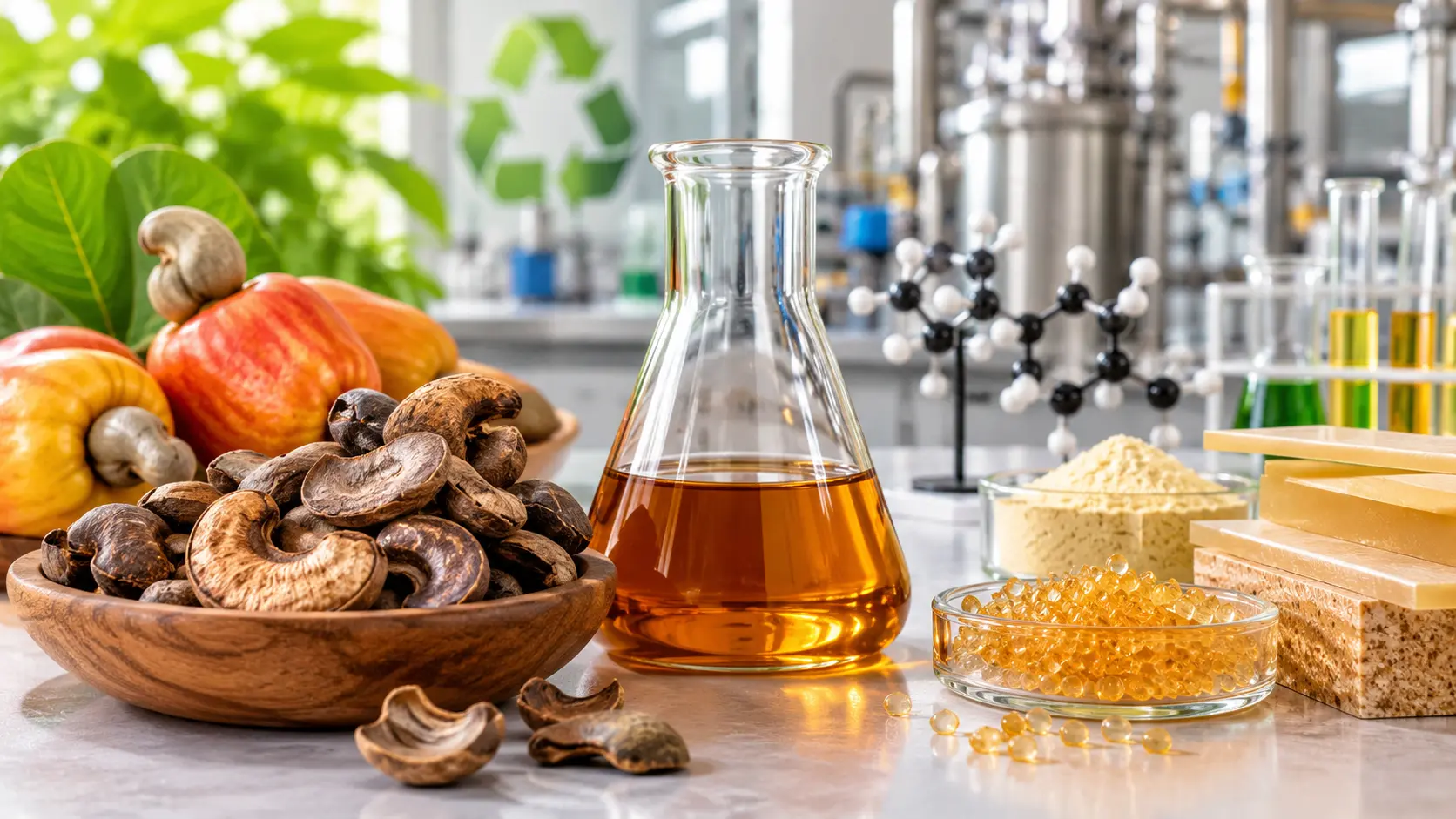
The chemical industry is changing. As manufacturers look for more sustainable alternatives to petroleum-based raw materials, naturally derived chemicals are gaining attention. One such promising ingredient is Cardanol, a phenolic compound obtained from Cashew Nut Shell Liquid (CNSL).
What makes cardanol interesting is its ability to turn a cashew processing by-product into a valuable industrial raw material. From bio-based resins and epoxy coatings to adhesives, polymers and specialty chemicals, cardanol is opening new possibilities for modern manufacturing.
For industries exploring renewable raw materials, cardanol offers a practical connection between agricultural resources and industrial innovation.
What Is Cardanol and Where Does It Come From?
Cardanol is a naturally derived phenolic compound obtained from Cashew Nut Shell Liquid (CNSL). This liquid is extracted from cashew nut shells, which are generated during cashew processing.
Commercial cardanol is commonly produced through the decarboxylation of anacardic acid present in natural CNSL.
Its chemical structure contains an aromatic ring, one hydroxyl group and a long hydrocarbon side chain. This combination gives cardanol useful characteristics for chemical modification, resin manufacturing and polymer development.
Unlike many conventional industrial chemicals derived from petroleum, cardanol comes from a renewable agricultural by-product, making it an interesting option for the growing bio-based chemical industry.
Why Is Cardanol Important for the Bio-Based Chemical Industry?
The demand for sustainable chemicals is increasing as manufacturers focus on reducing their dependence on fossil-based resources.
Cardanol supports this shift by providing a renewable building block for developing different industrial materials.
Its importance comes from three major factors:
⦁Renewable origin: Cardanol is derived from cashew nut shells, an agricultural processing by-product.
⦁Chemical versatility: Its phenolic structure allows it to undergo different chemical reactions and modifications.
⦁Industrial potential: It can be used in developing resins, coatings, adhesives, polymers and specialty chemical formulations.
For manufacturers, cardanol is not simply another natural ingredient. It is a valuable raw material that connects green chemistry with practical industrial applications.
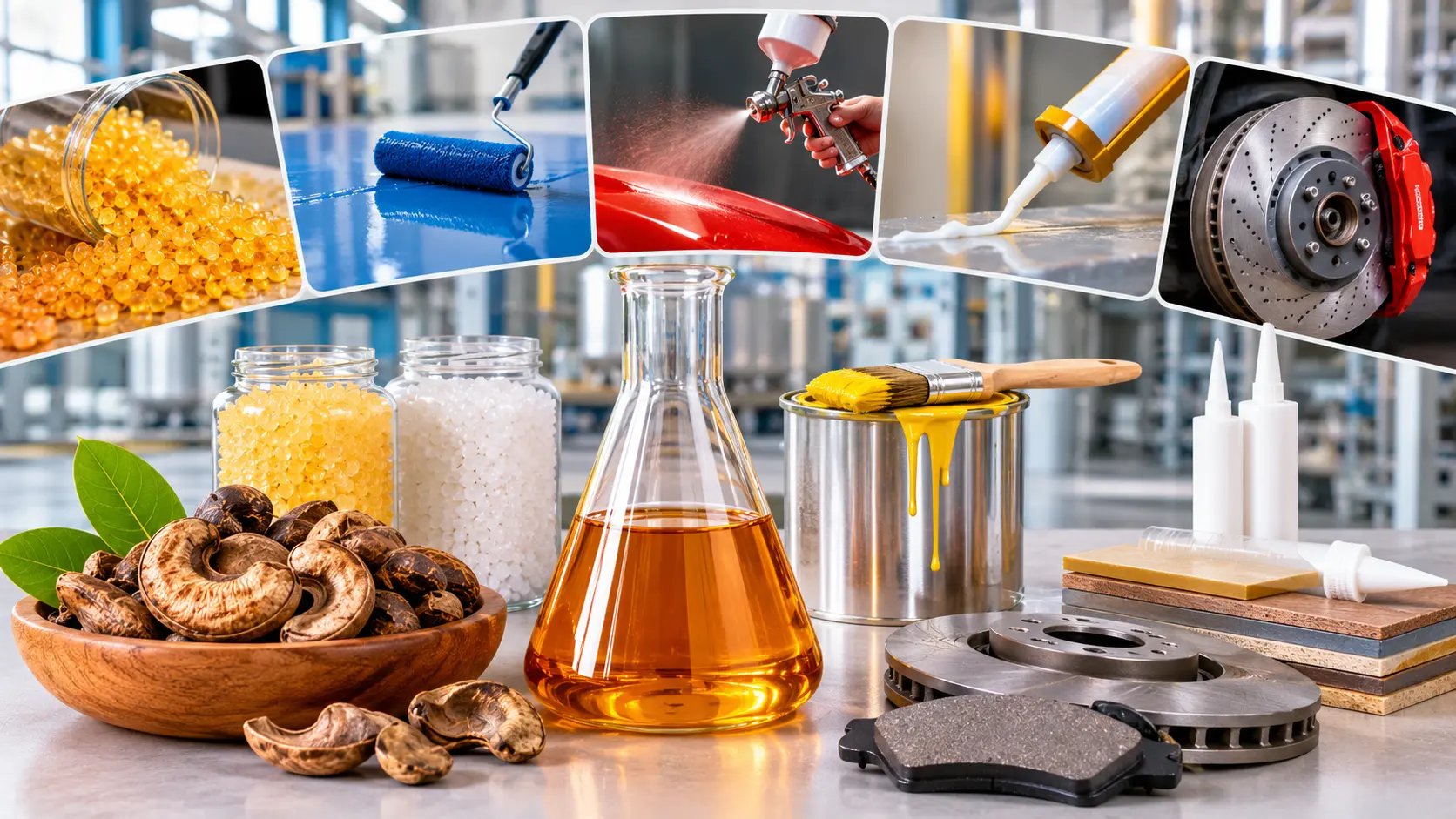
Cardanol is gaining attention across several industries because of its adaptable chemical structure and formulation possibilities.
1. Bio-Based Resin Manufacturing
One of the important applications of cardanol is in the development of bio-based resins.
It can be used to produce modified phenolic resin systems with properties suited to different industrial requirements.
Cardanol-based resins are explored in applications where flexibility, chemical resistance and durability are important.
2. Epoxy Resins and Protective Coatings
The demand for high-performance epoxy resins continues across construction, automotive, marine and manufacturing industries.
Cardanol can be chemically modified to produce cardanol-based epoxy materials and curing agents.
These materials are used in developing industrial coatings, protective finishes and specialty formulations. Depending on the formulation, they can offer useful flexibility, water resistance and chemical resistance.
3. Paints and Surface Coatings
Industrial surfaces need protection from moisture, corrosion, chemicals and everyday wear.
Cardanol-based coatings are gaining attention because they can contribute to formulations designed for protective performance.
They are relevant to research and manufacturing applications involving metal surfaces, industrial equipment and other protective coating systems.
4. Adhesives and Sealants
Adhesives and sealants play an important role in construction, automotive and industrial manufacturing.
Cardanol-derived materials can be incorporated into selected adhesive formulations to support properties such as bonding performance, flexibility and durability.
Their suitability depends on the formulation, application conditions and required performance standards.
5. Friction Materials and Automotive Components
Cardanol-based phenolic resins are also relevant to the automotive industry, particularly in friction material manufacturing.
These resin systems can be used in products such as brake linings, where resistance to heat, pressure and mechanical stress is essential.
This makes cardanol an interesting renewable raw material for selected automotive and engineering applications.
Cardanol vs Petroleum-Based Chemicals: What Makes It Different?
Traditional industrial chemicals often depend on petroleum-derived raw materials. Cardanol provides another option because it comes from a renewable biological source.
Its long hydrocarbon side chain and phenolic structure make it suitable for chemical modification and the development of specialty materials.
However, cardanol is not a direct replacement for every petroleum-based chemical. Its performance depends on the intended application, processing method and final formulation.
For manufacturers, the real advantage lies in exploring bio-based alternatives that can meet technical requirements while supporting more responsible raw material sourcing.
How Cardanol Supports Sustainable Manufacturing
Sustainability is becoming an important consideration across modern manufacturing.
Cashew nut shells are a by-product of the cashew processing industry. Extracting Cashew Nut Shell Liquid (CNSL) and converting its components into industrial chemicals helps create additional value from this agricultural resource.
Cardanol is an example of how agricultural by-products can become useful raw materials for renewable chemicals and bio-based industrial products.
It also supports the principles of the circular economy, where resources are used more efficiently and waste materials are converted into valuable products.
The overall environmental benefit, however, depends on responsible sourcing, extraction efficiency, processing methods and the complete product life cycle.
Why Quality Cardanol Matters in Industrial Applications
The performance of cardanol-based products depends significantly on the quality and consistency of the raw material.
Manufacturers should consider important parameters such as:
⦁Purity and chemical composition
⦁Moisture and impurity levels
⦁Product specifications
⦁Batch-to-batch consistency
⦁Suitability for the intended formulation
Working with a reliable Cardanol supplier helps industrial buyers maintain consistent raw material quality and achieve better control over their manufacturing processes.
The Future of Cardanol in the Chemical Industry
The future of the bio-based chemical industry will depend on materials that combine renewable sourcing with reliable industrial performance.
Cardanol has strong potential in this space because of its natural origin, chemical versatility and applications in resins, coatings, adhesives and polymers.
As research and product development continue, new opportunities may emerge for cardanol-based materials across different manufacturing sectors.
For companies looking to explore sustainable industrial chemicals, cardanol represents an important step towards making better use of natural resources.
Conclusion
Cardanol is transforming the bio-based chemical industry by turning a cashew processing by-product into a valuable industrial raw material.
Its applications in bio-based resins, epoxy coatings, adhesives, polymers and friction materials make it relevant to manufacturers exploring renewable chemical solutions.
At Top Cashews, we recognise the industrial value of cashew-derived resources and the growing importance of CNSL-based chemicals. By supporting the use of valuable cashew processing by-products, the industry can contribute to a more resource-efficient and sustainable manufacturing future.
