
Main Industrial Uses of Cashew Nut Shell Oil (CNSL) in India

Cashew Nut Shell Oil: A Sustainable Industrial Raw Material
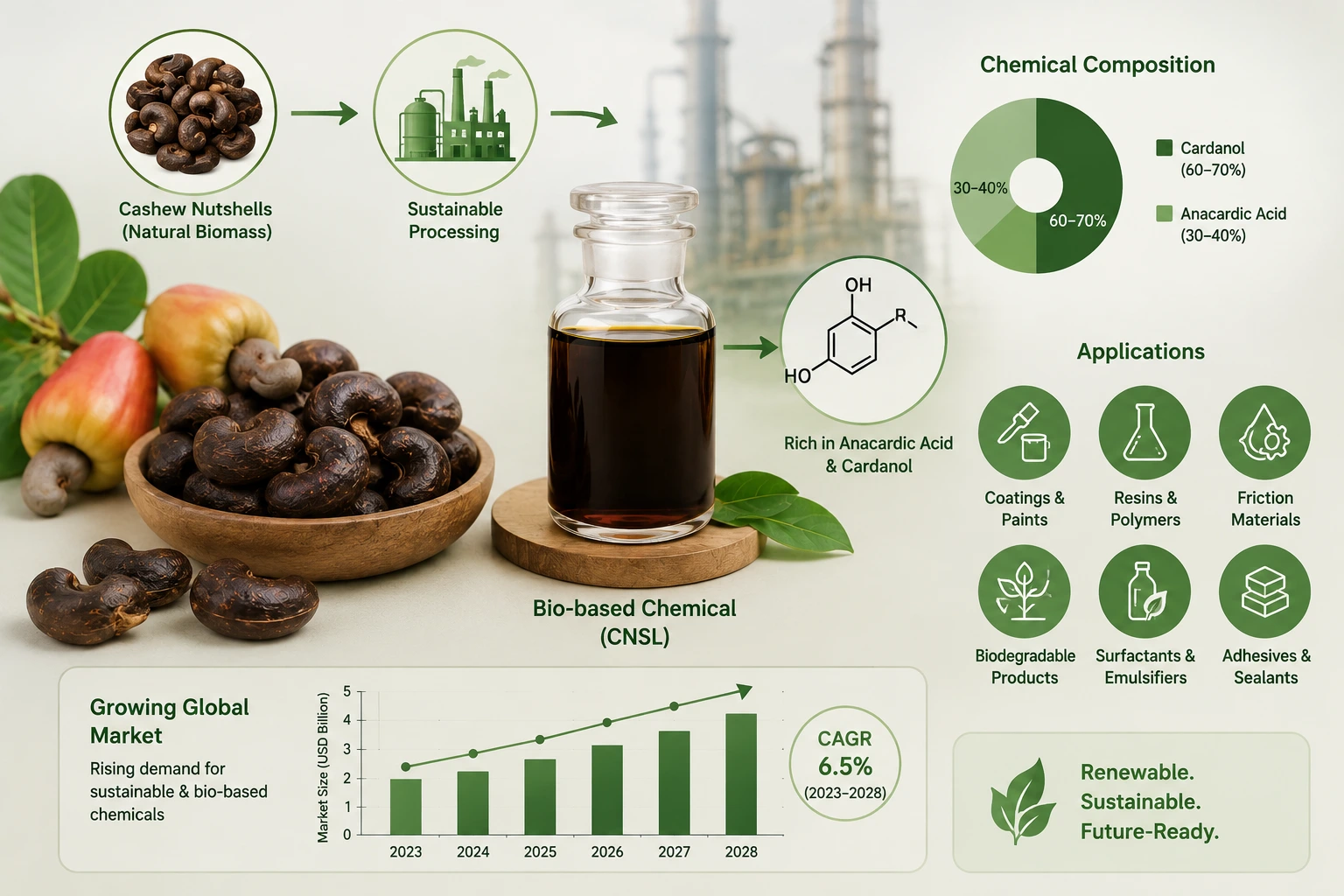
India is one of the world's largest producers and processors of cashew nuts, generating significant quantities of cashew nut shells as a by-product. These shells are far more than agricultural waste—they are a valuable source of Cashew Nut Shell Liquid (CNSL), commonly known as cashew nut shell oil. Rich in naturally occurring phenolic compounds such as anacardic acid, cardanol, and cardol, CNSL has become an essential raw material across numerous industries.
As manufacturers increasingly shift toward renewable and bio-based materials, CNSL has gained recognition as a sustainable alternative to petroleum-derived chemicals. Its exceptional resistance to heat, chemicals, moisture, and wear makes it indispensable in a wide range of industrial applications.
Why Industries Prefer Cashew Nut Shell Oil
Cashew nut shell oil combines performance with sustainability. Unlike conventional petroleum-based products, CNSL is derived from renewable biomass and offers excellent thermal stability, corrosion resistance, high mechanical strength, and outstanding adhesive properties. These characteristics make it suitable for demanding industrial environments while supporting environmentally responsible manufacturing.
Major Industrial Applications of Cashew Nut Shell Oil
1. Friction Materials Industry
The largest share of CNSL consumption comes from the friction materials sector. It is extensively used in the production of brake linings, clutch facings, brake pads, and railway braking systems. Cardanol-based resins improve heat resistance, reduce wear, and enhance braking efficiency, making them an ideal choice for automotive and heavy-duty applications.
2. Paints, Coatings and Protective Finishes
Cashew nut shell oil is widely used in industrial paints and protective coatings due to its exceptional resistance to chemicals, corrosion, moisture, and harsh weather conditions. Marine coatings, heavy machinery paints, anti-corrosion primers, and industrial maintenance coatings often utilize CNSL-derived resins to increase product durability and service life.
3. Phenolic Resin Manufacturing
Cardanol extracted from CNSL serves as an important raw material in manufacturing phenolic resins. These resins are widely used in laminates, electrical insulation materials, moulding compounds, abrasives, plywood adhesives, and industrial composites. Their superior thermal stability makes them ideal for high-performance engineering applications.
4. Adhesives and Sealants
Industrial adhesives formulated with CNSL provide excellent bonding strength while maintaining flexibility and chemical resistance. They are commonly used in plywood manufacturing, furniture production, construction materials, flooring systems, packaging, and industrial assembly processes.
5. Rubber Processing Industry
Rubber manufacturers incorporate CNSL-based resins into tyres, conveyor belts, automotive rubber components, footwear, and industrial rubber goods. These additives improve elasticity, abrasion resistance, ageing performance, and overall product durability.
6. Electrical and Electronics
Due to its insulating properties, cashew nut shell oil is widely used in electrical varnishes, insulating coatings, cable compounds, transformers, motors, generators, and switchgear components. Its thermal stability ensures reliable performance even under demanding operating conditions.
7. Construction Chemicals
The construction industry increasingly utilizes CNSL in waterproofing compounds, industrial flooring, protective concrete coatings, sealants, and corrosion-resistant treatments. Its excellent adhesion and chemical resistance contribute to longer-lasting infrastructure and reduced maintenance costs.
8. Foundry and Casting Applications
Foundries use CNSL-based binders in moulds and cores for metal casting operations. These binders provide excellent dimensional stability, thermal resistance, and surface finish while improving production efficiency in iron, steel, and non-ferrous casting industries.
9. Polymer and Composite Manufacturing
As industries adopt sustainable materials, CNSL is finding new applications in bio-based polymers, polyurethane systems, fibre-reinforced composites, and engineering plastics. These advanced materials combine environmental benefits with high mechanical performance, making them attractive for automotive, aerospace, and construction sectors.
10. Oil, Gas and Heavy Engineering
CNSL-derived coatings are highly resistant to chemicals, saltwater, and extreme environmental conditions. This makes them suitable for pipelines, storage tanks, offshore structures, drilling equipment, and heavy industrial machinery where corrosion protection is essential.
Growing Demand for CNSL in India
India's rapid industrialization, combined with increasing emphasis on sustainable manufacturing, has significantly boosted demand for cashew nut shell oil. Industries are actively replacing petroleum-based chemicals with renewable alternatives that offer comparable or superior performance.
Key sectors driving this growth include:
Automotive friction materials
Industrial coatings
Epoxy curing agents
Phenolic resins
Construction chemicals
Rubber processing
Bio-based polymers
Electrical insulation products
With government initiatives promoting green manufacturing and circular economy practices, CNSL is expected to play an even greater role in India's industrial development.
Why Cashew Nut Shell Oil Is the Future of Industrial Manufacturing
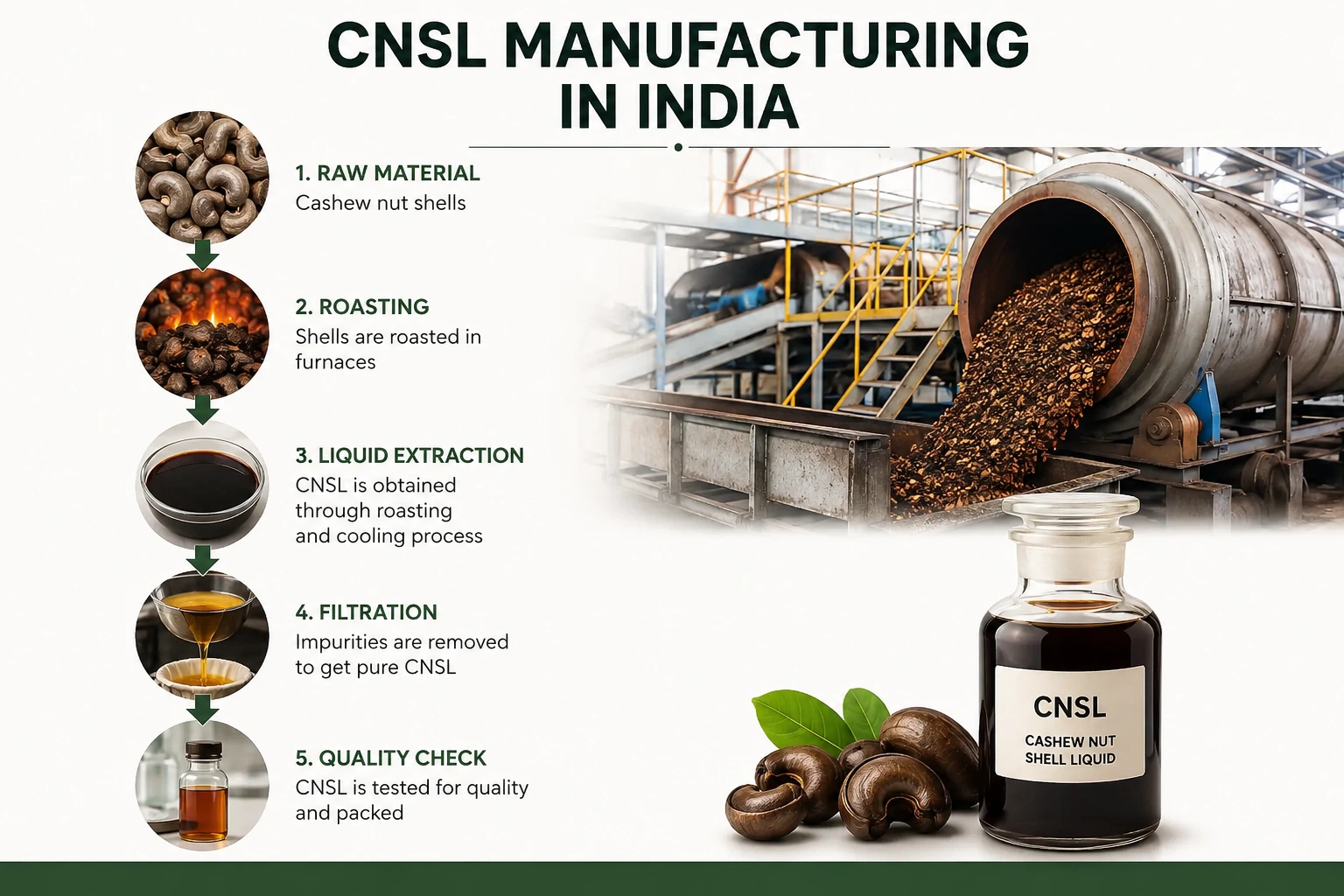
Cashew nut shell oil represents the perfect balance between sustainability and industrial performance. It transforms agricultural waste into a high-value industrial chemical while reducing dependence on fossil fuel-based raw materials. Its versatility across multiple industries, combined with excellent mechanical and chemical properties, positions CNSL as one of the most promising renewable resources for modern manufacturing.
As businesses continue their transition toward environmentally responsible production, the demand for high-quality CNSL is expected to grow steadily across domestic and international markets.
Conclusion
Cashew nut shell oil has evolved from a simple agricultural by-product into a strategic industrial raw material used across automotive, construction, coatings, rubber, electrical, foundry, and polymer industries. Its renewable origin, exceptional durability, and wide-ranging applications make it a preferred choice for manufacturers seeking high-performance, sustainable solutions.
For industries looking to reduce environmental impact without compromising quality, Cashew Nut Shell Oil continues to be one of the most reliable and versatile bio-based materials available today.
