
Water Treatment with Activated Carbon | Complete Guide
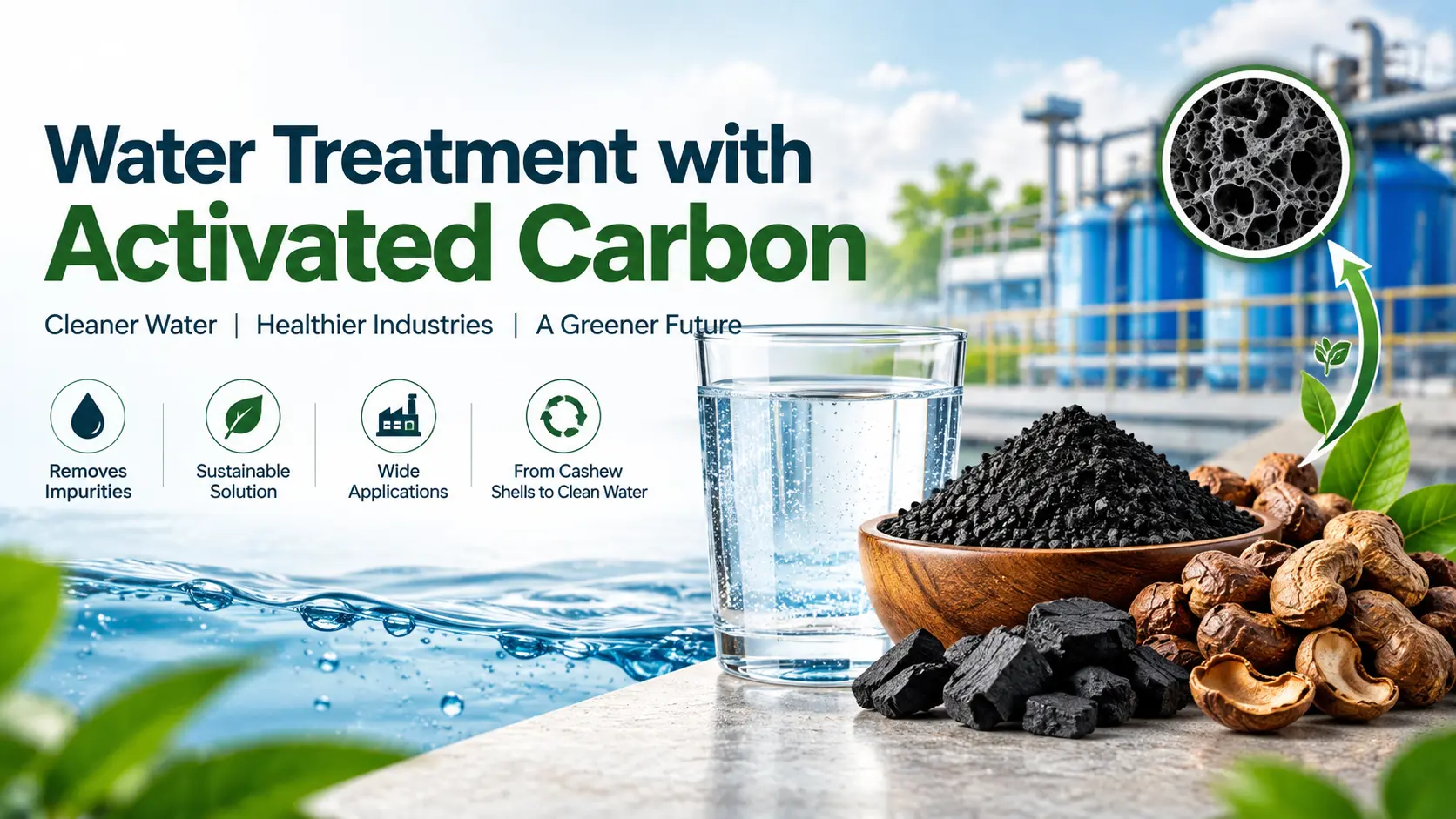
Water touches almost every part of our lives. It flows through factories, hospitals, food processing plants, pharmaceutical units, and our homes. But before water becomes safe enough for use, it often carries chlorine, unpleasant odors, organic pollutants, dyes, pesticides, and countless invisible impurities.
So, how do industries clean water without relying entirely on harsh chemicals?
The answer is Water Treatment with Activated Carbon a technology trusted across the world for its ability to purify water efficiently and sustainably.
What makes this even more fascinating is that agricultural by-products like Cashew Nut Shell are now being explored as renewable raw materials for producing Biomass Activated Carbon. Instead of becoming waste, cashew shells can become part of an environmental solution.
In this guide, you'll learn how activated carbon works, why adsorption matters, where it is used, and how sustainable biomass is shaping the future of water purification.
Why clean water is no longer optional
Every industry depends on water quality.
A beverage company needs pure water for consistent taste. Pharmaceutical manufacturers require extremely clean process water. Textile factories must treat wastewater before discharge. Even municipal treatment plants work continuously to deliver safe drinking water.
Poor water quality can lead to:
Unpleasant taste and odor
Product contamination
Equipment damage
Environmental pollution
Higher operational costs
This is exactly where Activated Carbon becomes one of the most valuable filtration materials available today.
What is Activated Carbon?
At first glance, activated carbon looks like ordinary black charcoal. But scientifically, they're very different.
Activated Carbon is a specially processed carbon material filled with millions of microscopic pores. These tiny pores create an enormous internal surface area often comparable to the size of several football fields within a single kilogram of carbon.
More surface area means more space to trap unwanted molecules. That's what makes activated carbon so powerful in Water Treatment.
Activated Carbon vs Ordinary Charcoal
At first glance, activated carbon and ordinary charcoal may look almost identical they're both black, carbon-based materials. However, the real difference lies inside their structure. Activated Carbon is specially processed to create millions of microscopic pores, giving it an exceptionally large surface area that makes it ideal for adsorption and water & air purification. In contrast, ordinary charcoal has a limited pore structure and is primarily used as a fuel for heating or cooking. Simply put, the difference isn't in the color it's in the engineered internal structure that makes activated carbon an effective industrial filtration material.
The science that makes it work: Adsorption
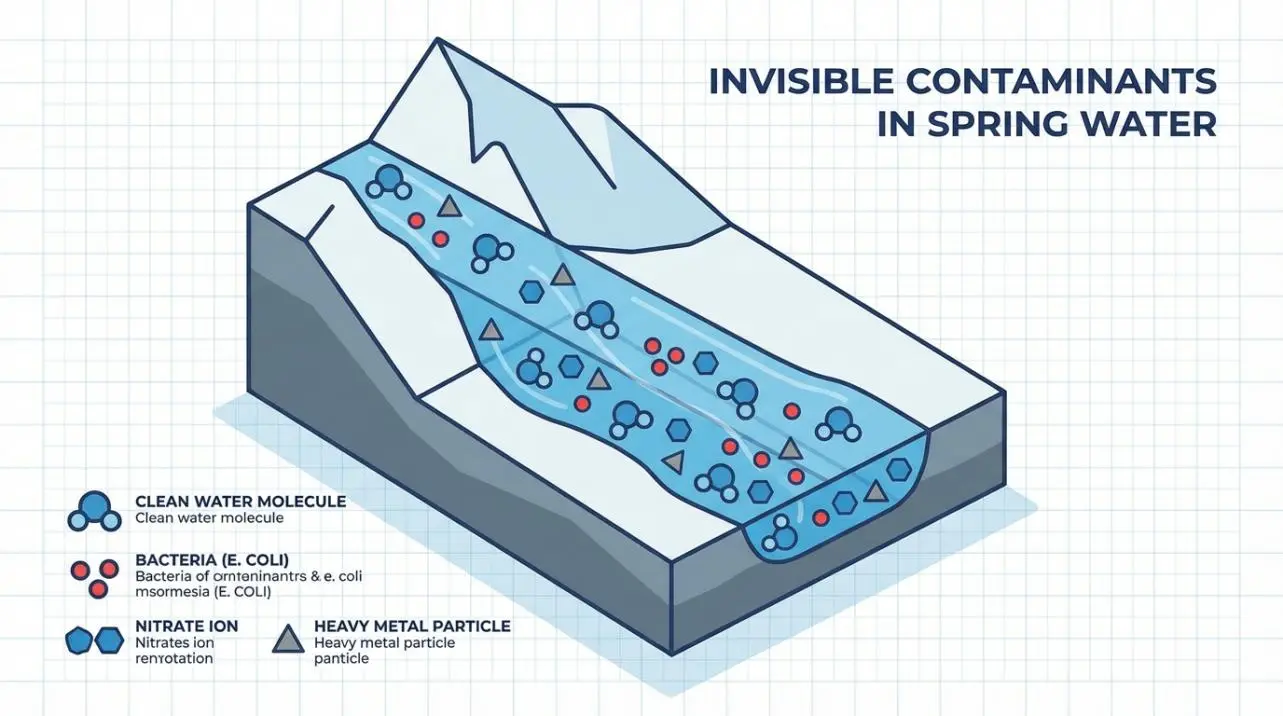
The heart of Activated Carbon Filtration is a process called Adsorption. People often confuse adsorption with absorption.
Think of it this way:
Absorption is like a sponge soaking water inside.
Adsorption is like dust sticking to a magnet's surface.
When contaminated water flows through an Activated Carbon Filter, organic molecules are naturally attracted to the carbon's porous surface. Instead of passing through, they become attached inside those microscopic pores.
This process removes many unwanted compounds without changing the water's natural composition. It's simple, effective, and remarkably efficient.
What does activated carbon actually remove?
Not every contaminant behaves the same way. Activated carbon is exceptionally effective against organic pollutants but is usually combined with other technologies for complete purification.
Excellent removal performance
Chlorine
Bad taste
Unpleasant odor
Organic chemicals
Pesticide residues
Color-causing compounds
VOCs (volatile organic compounds)
Limited removal capability
Dissolved salts
Calcium & magnesium
Most bacteria and viruses
Certain heavy metals
This is why advanced Water Purification systems often combine activated carbon with RO membranes, UV treatment, or biological filtration.
Two types you should know: GAC and PAC
Granular Activated Carbon (GAC): Granular Activated Carbon (GAC) consists of larger carbon particles placed inside filtration columns. Water continuously passes through the carbon bed, making it ideal for long-term filtration systems.
Best for: Drinking water plants, RO pretreatment, food & beverage industries, municipal filtration.
Powdered Activated Carbon (PAC): Powdered Activated Carbon (PAC) is much finer and is directly mixed into water during treatment. It works quickly and is commonly used when contamination levels suddenly increase.
Best for: Wastewater treatment, odor control, emergency industrial applications.
Both serve the same purpose but their application depends on the treatment process.
From Cashew Nut Shell to Activated Carbon
One of the biggest sustainability stories in modern manufacturing begins with something many people throw away the Cashew Nut Shell.
During cashew processing, large quantities of shells are generated as by-products. Instead of treating them as waste, industries are discovering ways to convert them into valuable carbon materials.
The journey looks like this:
.webp?alt=media&token=41f4197e-e5eb-4e1e-b599-ee540a5fc21d)
This creates Cashew Shell Activated Carbon, a renewable alternative that supports circular economy principles by converting agricultural waste into high-value industrial products.
It's an excellent example of sustainable innovation where one industry's by-product becomes another industry's solution.
The applications of Activated Carbon for Water Purification are surprisingly diverse.
Municipal water treatment
Cities use activated carbon to improve drinking water quality by reducing chlorine, odor, and naturally occurring organic compounds before distribution.
Food & beverage industry
The quality of water directly affects flavor. Breweries, soft drink manufacturers, and dairy plants rely on activated carbon for consistent production standards.
Pharmaceutical manufacturing
Medicines require exceptionally pure process water. Activated carbon helps remove trace organic impurities before advanced purification stages.
Textile & chemical industries
Industrial wastewater often contains dyes, solvents, and organic chemicals. Industrial Water Treatment systems commonly include activated carbon as part of multi-stage treatment.
Why biomass matters in sustainable water treatment
Sustainability is no longer just an environmental goal it's becoming a business requirement.
Using Biomass Activated Carbon offers multiple advantages:
Better utilization of agricultural by-products
Reduced industrial waste
Renewable raw material sourcing
Support for circular manufacturing
Additional value creation in the cashew processing industry
For businesses focused on responsible production, biomass-derived carbon represents an important step toward Sustainable Water Treatment.
How to Choose the Right Activated Carbon Filter
Choosing the right Activated Carbon Filter is not simply about selecting the most affordable option. The right carbon depends on several factors, including the raw material used, surface area, particle size, moisture content, ash content, and the intended application. Surface area and pore structure play an important role in determining adsorption performance, while particle size helps decide whether granular or powdered carbon is more suitable.
For industrial applications, buyers should also consider the type and concentration of contaminants, water flow rate, operating conditions, and required treatment performance. Checking technical specifications and quality parameters before purchase can help ensure that the selected activated carbon delivers reliable and consistent results. A good supplier should always provide technical specifications, quality parameters, and application guidance before purchase.
The future of cleaner water starts with smarter materials As industries continue searching for cleaner and more sustainable technologies, Water Treatment with Activated Carbon remains one of the most trusted purification methods available. Its ability to remove organic contaminants through Adsorption, combined with growing interest in renewable materials like Cashew Nut Shell, makes it both an effective and environmentally responsible solution.
Cleaner water isn't achieved by filtration alone it's achieved through better materials, better resource utilization, and sustainable innovation. And that's exactly why activated carbon continues to play such an important role in the future of water treatment.
