
What Makes Cashew Nut Shell Liquid (CNSL) Different from other natural oils?

When people hear about Cashew Nut Shell Liquid (CNSL) for the first time, one of the most common questions is:
Why is CNSL so special compared to other natural oils?
After all, there are many plant-based oils available today, such as soybean oil, linseed oil, castor oil, sunflower oil, and coconut oil. So, what makes Cashew Nut Shell Liquid (CNSL) stand out?
The answer lies in its unique chemical composition, exceptional performance, sustainability, and wide range of industrial applications. Unlike ordinary vegetable oils, CNSL offers properties that make it a valuable raw material for industries worldwide.
Let's explore what makes CNSL one of the most remarkable bio-based industrial oils available today.
What Makes CNSL Different?
You might be wondering, aren't there lots of natural oils out there? What makes CNSL so different?
Great question!
The answer lies in its chemical structure.
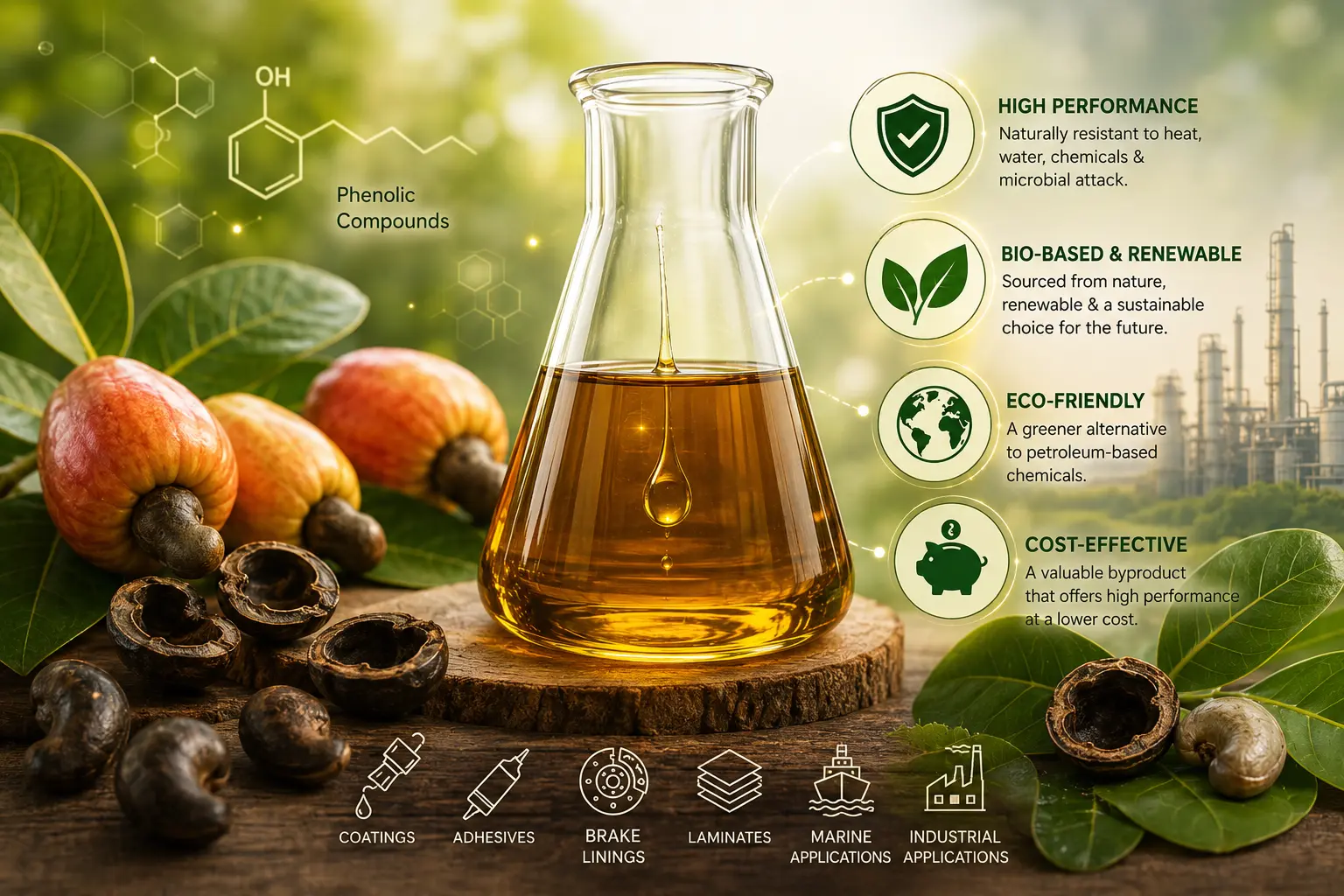
Most plant-based oils are made of simple fatty acids. CNSL, however, contains phenolic compounds-a unique type of chemical structure that gives it properties that other oils simply don't have.
These naturally occurring compounds, mainly anacardic acid, cardanol, cardol, and 2-methyl cardol, are responsible for the outstanding performance of CNSL in industrial applications.
Unlike ordinary vegetable oils that are mainly used for cooking or lubrication, CNSL is an industrial raw material capable of replacing many petroleum-based chemicals.
Natural Resistance That Lasts
These phenolic compounds make CNSL naturally resistant to heat, water, and microbial attack (that means bacteria and fungi).
Because of this, CNSL-based materials last much longer than products made from regular vegetable oils or even certain synthetic chemicals.
Think about it this way—if you had a choice between a raincoat that falls apart after one storm and one that keeps you dry for years, which would you pick?
CNSL is basically the second raincoat! This excellent resistance makes CNSL an ideal ingredient for products that need to perform in harsh environments.
Industries rely on CNSL because it can withstand:
High temperatures
Moisture and humidity
Chemical exposure
Corrosion
Fungal and bacterial growth
Heavy wear and tear
These qualities significantly increase the lifespan of industrial products while reducing maintenance costs.
Excellent Heat Resistance
One of the biggest advantages of Cashew Nut Shell Liquid is its outstanding thermal stability.
Many natural oils begin to degrade when exposed to high temperatures. CNSL behaves differently because of its phenolic structure.
Its heat-resistant properties make it suitable for manufacturing:
Brake linings
Clutch facings
Industrial friction materials
Heat-resistant coatings
High-performance laminates
Even under continuous heat exposure, CNSL-based materials maintain their strength and durability.
Superior Water and Chemical Resistance
Moisture is one of the biggest enemies of industrial materials.
Water can weaken coatings, damage adhesives, and promote corrosion. CNSL naturally resists water penetration, making it highly valuable in products designed for outdoor or high-humidity environments.
This is why it is commonly used in:
Marine coatings
Waterproof paints
Protective coatings
Industrial sealants
Wood preservatives
Its chemical resistance also protects products from acids, alkalis, and industrial solvents.
Naturally Antimicrobial
Another impressive feature of CNSL is its natural resistance to microorganisms.
Because of its phenolic compounds, CNSL helps protect materials against:
Bacteria
Fungi
Mold
This property increases the durability of industrial products and reduces biological degradation over time.
A Bio-Based and Renewable Resource
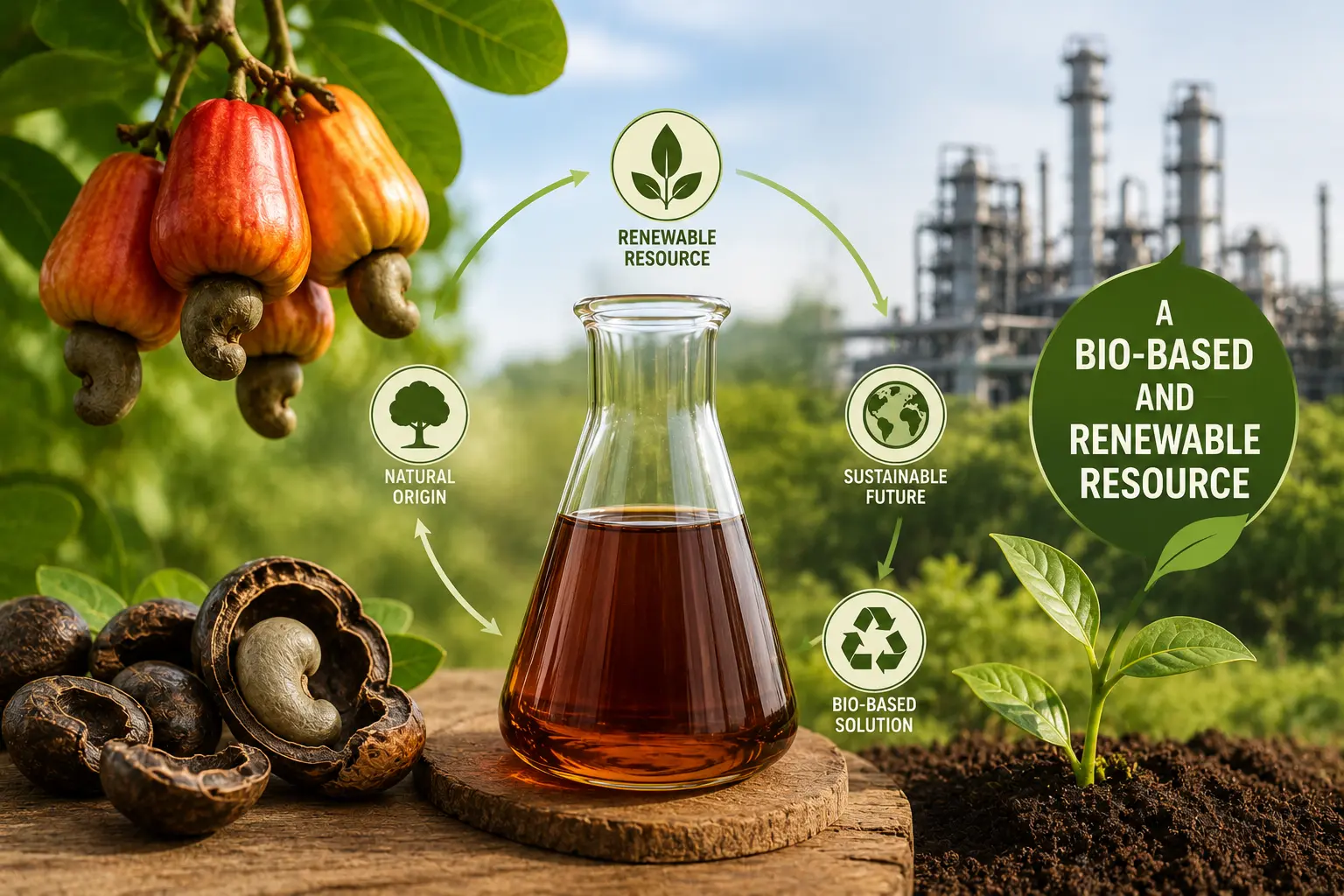
Another BIG reason CNSL is special is that it's bio-based and renewable.
Unlike petroleum-based chemicals that come from fossil fuels—which take millions of years to form—CNSL comes from the cashew tree, which produces new crops every year.
That means industries can obtain valuable industrial chemicals without exhausting non-renewable natural resources.
This makes CNSL a much more sustainable option for manufacturers looking to reduce their environmental impact.
In today's world, where sustainability has become a major priority, CNSL is emerging as a hero of green chemistry.
Supporting Sustainable Manufacturing
Governments and industries across the globe are focusing on reducing carbon emissions and replacing petroleum-derived chemicals.
CNSL plays an important role in this transition because it is:
Renewable
Bio-based
Eco-friendly
Low-carbon
Resource-efficient
Using CNSL allows manufacturers to develop products with a lower environmental footprint while maintaining high performance.
Cost-Effective Without Compromising Quality
Another major advantage of CNSL is its affordability.
Because it's a byproduct of cashew processing—an industry that was already going to produce cashew shells anyway-there is no extra cost involved in growing the raw material.
Instead of becoming agricultural waste, the shells are transformed into a valuable industrial resource.
This makes CNSL a highly cost-effective choice for manufacturers around the world.
Companies benefit from:
Lower raw material costs
Better product performance
Sustainable sourcing
Reduced waste
Higher production efficiency
It's a perfect example of turning waste into value.
Wide Range of Industrial Applications
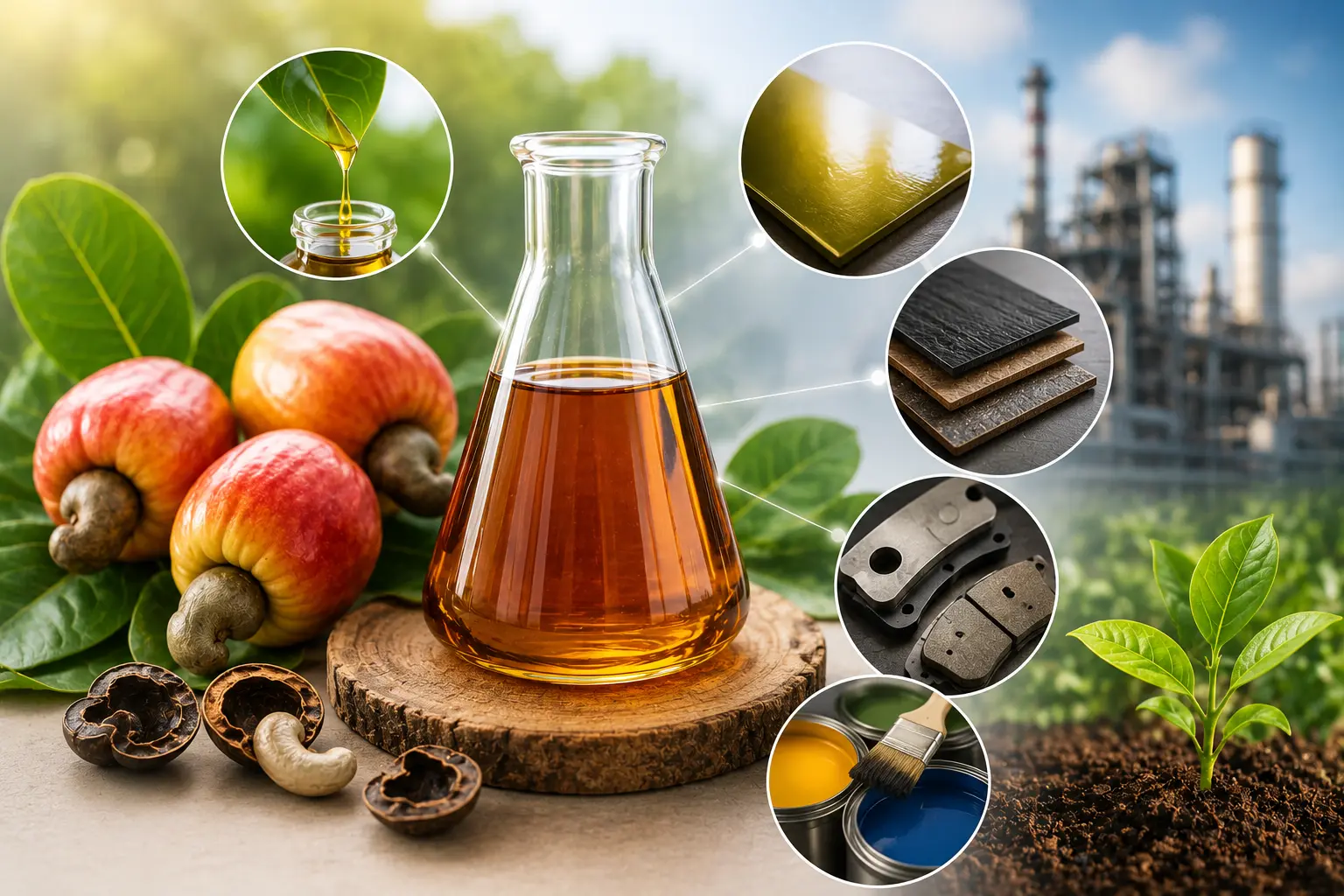
Thanks to its unique properties, CNSL is used in numerous industries worldwide.
Some of the most common applications include:
Industrial coatings, protective paints, Adhesives,Epoxy hardeners, Friction,materials, Brake linings, Clutch facings, Surface coatings, Insulation materials, Laminates, Rubber chemicals, Printing inks, Construction chemicals, Resins, Foundry chemicals
Researchers continue to discover new applications for CNSL as industries move toward greener alternatives.
Why Industries Are Switching to CNSL
Modern industries need materials that are:
Durable
Sustainable
Cost-effective
High-performing
Environmentally responsible
CNSL meets all of these requirements.
Compared to conventional vegetable oils, it offers significantly better mechanical and chemical performance. Compared to petroleum-based chemicals, it provides a renewable and eco-friendly alternative.
This combination makes CNSL increasingly popular across automotive, construction, coatings, electrical, marine, and chemical manufacturing industries.
The Future of Bio-Based Industrial Chemicals
As global demand for sustainable materials continues to grow, Cashew Nut Shell Liquid (CNSL) is expected to become even more important.
Researchers are continuously developing innovative CNSL-based products that can replace synthetic chemicals without sacrificing quality or performance.
With increasing investments in green manufacturing and circular economy practices, CNSL is no longer just a byproduct-it has become a valuable industrial resource.
Its ability to combine performance, affordability, sustainability, and versatility makes it one of the most promising bio-based chemicals available today.
Conclusion
So, what makes CNSL so special compared to other oils?
It all comes down to its unique phenolic chemical structure, which provides exceptional heat resistance, water resistance, chemical stability, and natural antimicrobial properties. Unlike ordinary vegetable oils, CNSL delivers industrial-grade performance while remaining bio-based, renewable, and environmentally friendly.
Its affordability, thanks to being a byproduct of cashew processing, further strengthens its position as a preferred raw material for manufacturers worldwide. Whether it's used in coatings, adhesives, brake linings, resins, or construction materials, Cashew Nut Shell Liquid continues to prove why it is one of the most versatile and sustainable industrial oils available today.
