
Why Industries Are Switching to Biomass Fuel: The Growing Demand for Cashew De-Oiled Cake (DOC)
Energy is the backbone of every industry, but the continuous rise in fuel prices has become a major concern for manufacturers across the globe. Over the past few years, the prices of coal, furnace oil, diesel, and natural gas have surged significantly, putting pressure on production costs and overall profitability. At the same time, industries are grappling with stringent environmental regulations and growing expectations to adopt cleaner energy solutions.
This is where biomass fuel has emerged as a reliable, cost-effective, and eco-friendly solution. Derived from renewable organic materials, biomass fuel offers industries the opportunity to reduce energy costs, decrease reliance on fossil fuels, and move towards a greener future. Among the various biomass options available today.
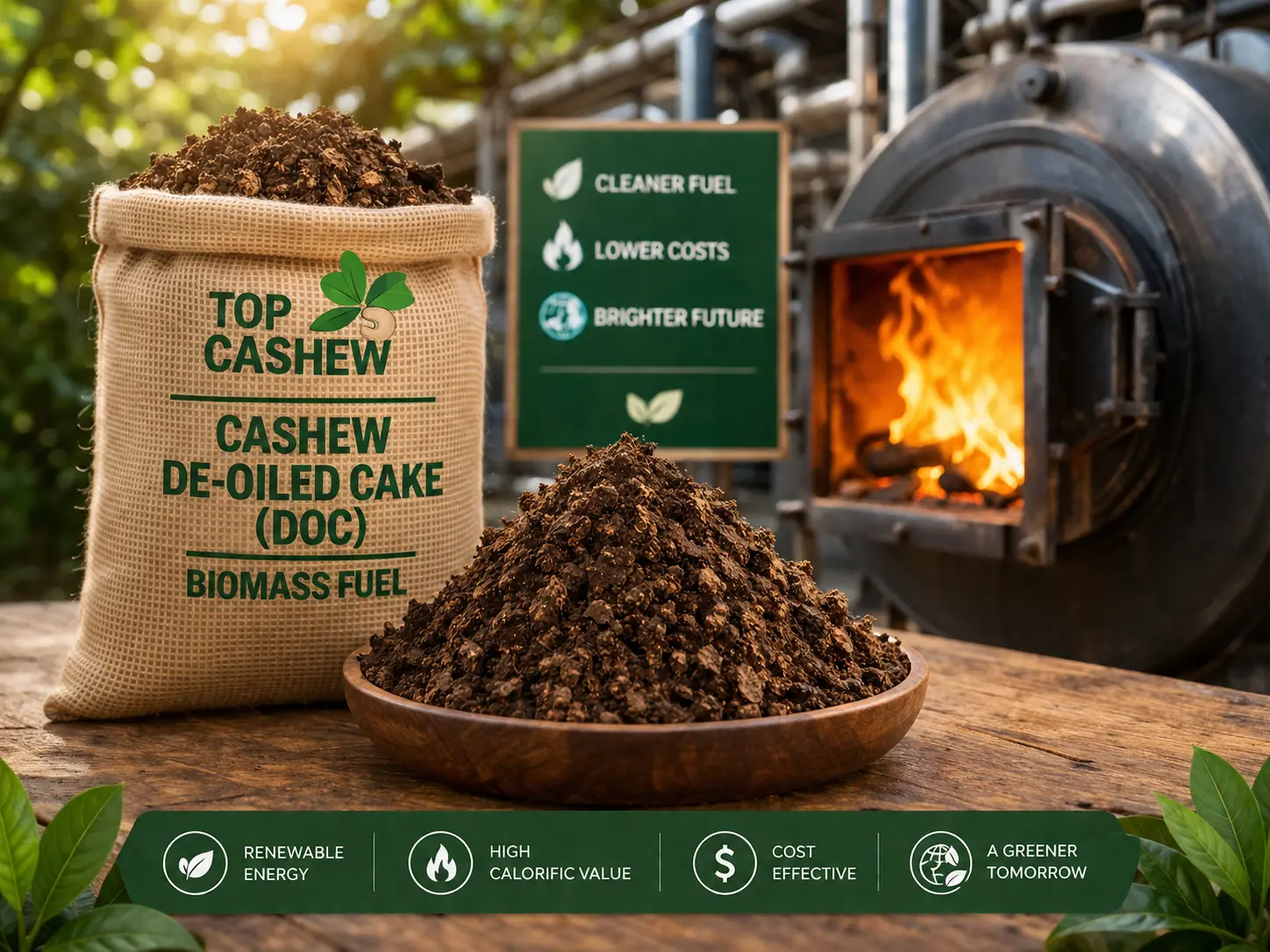
Top Cashew's Cashew De-oiled Cake (DOC) has emerged as a high-performance biomass fuel. With a calorific value of approximately 4,500–5,000 kcal/kg, it generates substantial heat for industrial heating applications, burns consistently, and delivers reliable performance. By converting cashew processing residues into renewable fuel, Top Cashew's Cashew (DOC) not only helps industries reduce operational costs but also promotes sustainable energy practices and the utilization of waste.
What is Biomass Fuel?
Biomass fuel is a renewable source of energy derived from organic materials such as agricultural residues, crop waste, forestry by-products, and other biodegradable substances. Instead of letting these materials go to waste, they are converted into fuel capable of generating heat and energy for industrial applications.
Why Industries Are Moving Towards Biomass Fuel
Rising Fuel Prices
A major reason for industries shifting towards biomass is the rising cost of conventional fuels. Prices of coal, furnace oil, and diesel fluctuate due to global demand, transportation costs, and supply chain disruptions. High fuel prices directly increase production costs, making it difficult for industries to remain competitive.
Cost-Effective Energy Solution
Biomass fuels offer an economical alternative without compromising thermal performance. Industries can significantly reduce their fuel costs while maintaining efficient heat generation. By using biomass instead of expensive fossil fuels, companies can improve operational efficiency and achieve long-term cost savings.
Renewable and Sustainable
Unlike coal and petroleum products, biomass fuels are derived from renewable organic materials. They utilize agricultural by-products that would otherwise go to waste; in doing so, they create a sustainable energy cycle while reducing reliance on non-renewable resources.
Environmentally Friendly
Biomass fuel helps reduce reliance on fossil fuels and facilitates the production of clean energy. It also promotes the productive use of agricultural and forestry waste, thereby reducing environmental pollution and fostering a circular economy.
Why Cashew De-Oiled Cake (DOC) is an Ideal Biomass Fuel
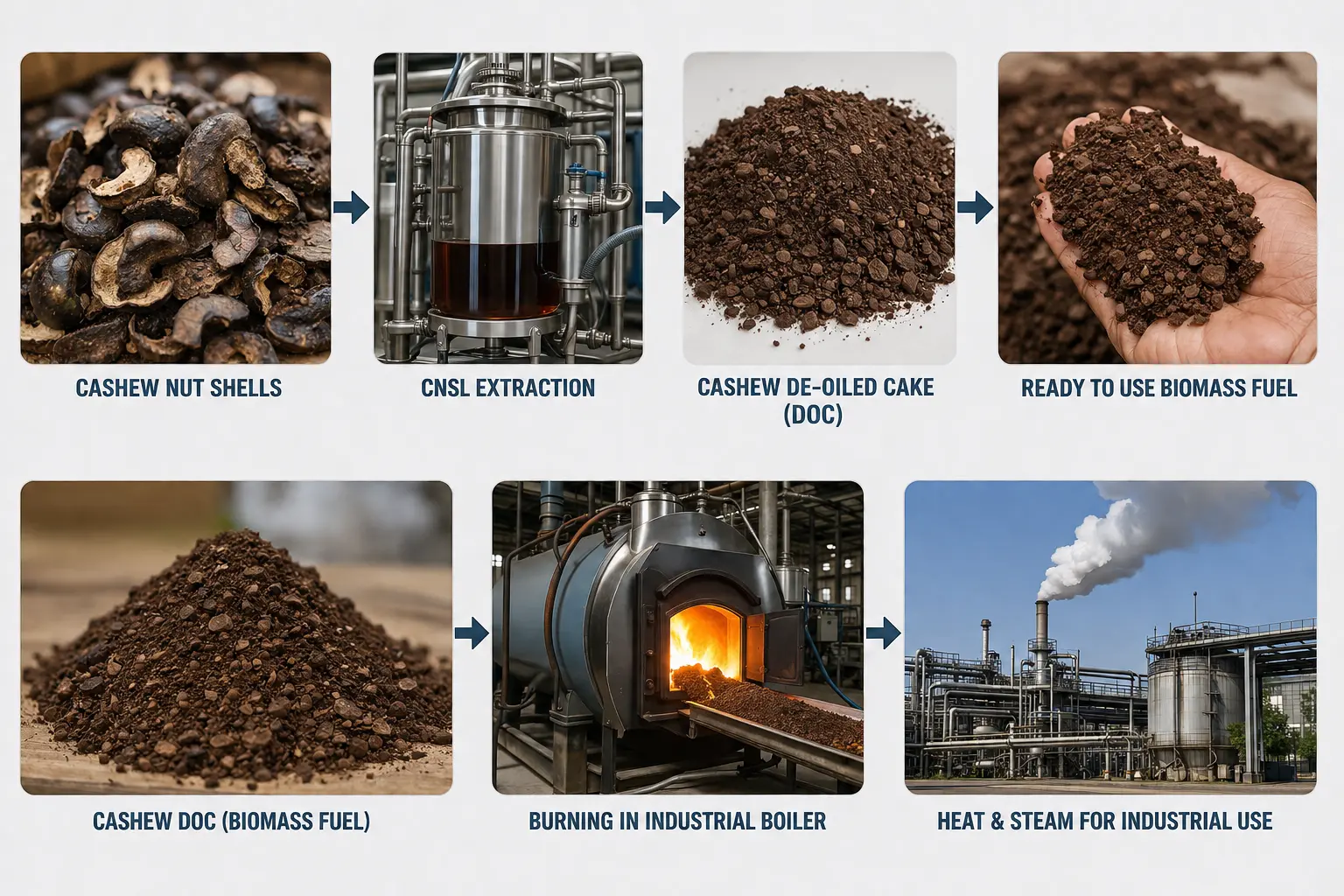
'Cashew De-oiled Cake' (DOC) is produced after extracting 'Cashew Nut Shell Liquid' (CNSL) from cashew shells. Instead of discarding this valuable by-product, it is converted into a high-energy biomass fuel.
Due to its excellent fuel properties, it is highly useful for industries requiring a reliable and cost-effective source of thermal energy.
Key benefits of Cashew DOC
• High calorific value of approximately 4,500–5,000 kcal/kg
• Excellent combustion efficiency
• Consistent heat generation
• Renewable and sustainable fuel
• Cost-effective alternative to conventional fuels
• Easy to store and transport
• Supports waste-to-energy initiatives
• Helps reduce overall fuel costs
Why Industries are Choosing Biomass Fuel
Industries where fuel accounts for a significant portion of operating costs can achieve substantial savings by adopting biomass.
Biomass fuel helps businesses to:
• Reduce total energy costs
• Improve fuel efficiency
• Reduce dependence on volatile fossil fuel markets
• Ensure a more stable and predictable fuel supply
• Increase operational profits in the long run
As environmental awareness and energy costs rise, biomass fuel is becoming an essential part of modern industrial operations.

Biomass fuel offers the following benefits to businesses:
• Reducing production costs.
• Improving energy efficiency.
• Achieving sustainability goals.
• Mitigating the impact of fuel price fluctuations.
• Strengthening long-term energy security.
As environmental awareness and energy costs rise, biomass fuel is becoming an essential part of modern industrial operations.
The Future of Biomass Fuel
The world is rapidly shifting towards renewable energy, and biomass fuel is expected to play a pivotal role in this transition. Governments, industries, and energy producers are investing in biomass solutions to reduce carbon emissions, improve waste management, and create a more sustainable energy ecosystem.
Biomass fuels, such as Top Cashew’s Cashew De-oiled Cake (DOC) , offer a practical pathway toward cleaner, more cost-effective, and sustainable industrial operations. They help businesses remain competitive while also contributing to a greener future.
Final Perspective
Biomass fuel represents a significant step towards a more sustainable energy future. By utilizing renewable biological resources, it offers an effective way to tackle rising energy costs, improve resource efficiency, and reduce environmental impact.
As industries explore cleaner energy alternatives, understanding the role of biomass fuel has become increasingly important. It is expected that continued research, technological advancements, and increased adoption will further enhance its contribution to sustainable industrial development in the coming years.
